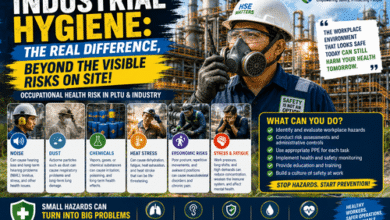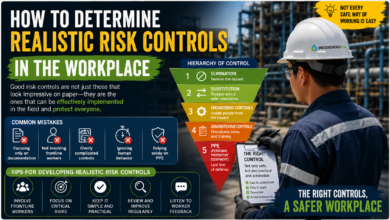
When people hear the words “workplace safety,” many immediately imagine construction helmets, reflective vests, safety shoes, or signs saying “Safety First.” That is not wrong, because all of those things are indeed part of workplace safety. However, safety is not only about personal protective equipment (PPE) or company rules.
Workplace safety is strongly connected to human behavior.
In many workplaces, accidents do not happen because equipment is damaged or machines fail. Instead, many incidents occur because of small things that seem insignificant. For example, forgetting to wear gloves, rushing while working, excessive joking in the work area, or feeling too experienced and ignoring procedures.
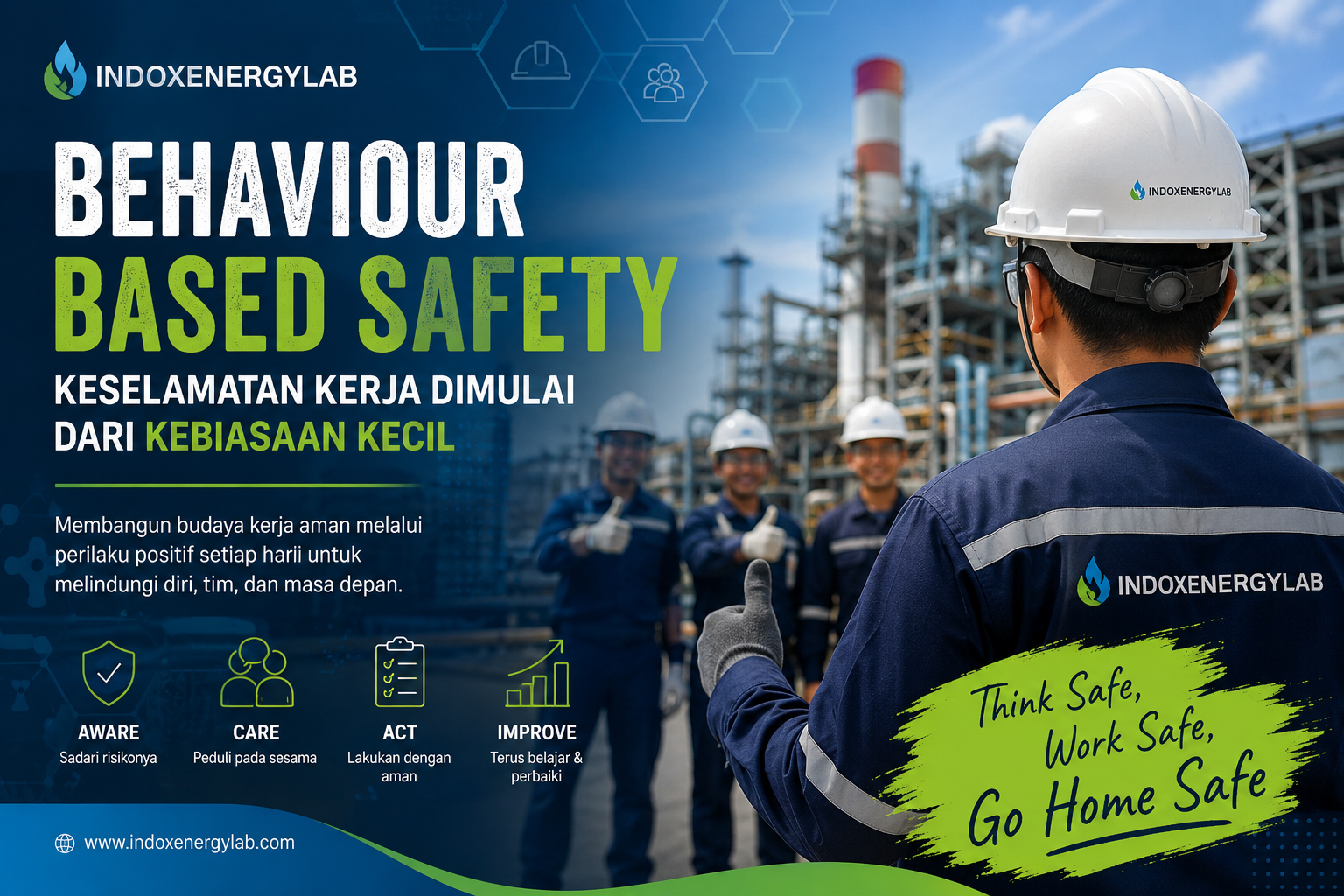
That is why the concept of Behaviour Based Safety (BBS) emerged.
BBS is a workplace safety approach that focuses on human habits and behaviors while working. Its goal is simple: to build a safe working culture through small actions that are practiced every day.
This topic is becoming increasingly important, especially in industries, construction projects, factories, mining operations, offices, and even schools and universities. Because ultimately, safety is not only the responsibility of the company or the HSE team, but the responsibility of everyone.
What Is Behaviour Based Safety?
Behaviour Based Safety is a safety management method that focuses on human behavior.
Simply explained, BBS tries to answer questions such as:
• Why does someone not wear PPE?
• Why do workers take shortcuts?
• Why are safety rules often ignored?
• Why do people continue unsafe actions even though they know the risks?
BBS believes that many workplace accidents are influenced by unsafe behavior.
Examples include:
• Not wearing a safety helmet
• Using a mobile phone while working
• Losing focus when operating equipment
• Ignoring SOPs
• Running in the workplace
• Working while joking around
• Not reporting dangerous conditions
• Using tools incorrectly
These actions often appear normal. However, many accidents begin from these small habits.
The interesting part is that BBS is not a program designed to find someone to blame. Its main focus is understanding why unsafe behaviors happen and how they can be changed into safer habits.
Why Is Behaviour Based Safety Important?
Imagine a company with modern equipment, complete SOPs, and excellent PPE. But the workers are lazy about wearing PPE and frequently break safety rules.
Is that workplace truly safe?
Not necessarily.
Because workplace safety is not only about facilities, but also about human behavior.
Many studies show that a large percentage of workplace accidents are influenced by human factors. Sometimes the causes are simple:
• Overconfidence
• Rushing
• Thinking the job is easy
• Lack of focus
• Underestimating risks
• Becoming used to breaking rules
For example, a worker may think:
“It’s only for a short time, I don’t need gloves.”
Or:
“I have worked like this many times and nothing happened.”
The problem is that accidents do not always come from major tasks. Sometimes they come from small unsafe habits that are repeatedly ignored.
That is why BBS is important to build awareness that safety must become part of daily behavior.
Common Unsafe Behaviors in the Workplace
Without realizing it, many unsafe behaviors happen regularly in workplaces and daily life.
1. Not Using PPE
This is one of the most common issues.
Some people feel helmets are too hot, gloves are uncomfortable, or safety shoes are too heavy.
However, PPE is designed to protect the body from injury risks.
2. Taking Shortcuts
Because they want to finish work faster, some people choose methods that are actually dangerous.
Examples:
• Not installing safety barriers
• Not isolating electricity before repair work
• Not using ladders properly
Shortcuts may look faster, but the risks are much higher.
3. Using Mobile Phones While Working
This is becoming more common today.
Losing focus for only a few seconds can trigger an accident, especially in areas involving machines or vehicles.
4. Not Reporting Hazards
Sometimes workers notice:
• damaged cables
• slippery floors
• faulty equipment
but choose to stay silent.
The reasons may include:
• Laziness
• Thinking it is not their responsibility
• Fear of being considered annoying
A small report can prevent a major accident.
5. Excessive Joking in Work Areas
A relaxed workplace environment is important.
However, joking in hazardous areas can create risks, for example joking near moving machinery or while operating heavy equipment.
Behaviour Based Safety Is Not About Finding Fault
One of the biggest misunderstandings about BBS is the idea that it is a program to monitor and punish workers.
That is not the main purpose.
BBS is about understanding human behavior.
For example:
If a worker does not wear safety glasses, the BBS approach is not immediately shouting or blaming.
Instead, it asks:
• Are safety glasses available?
• Are they still in good condition?
• Are they comfortable?
• Does the worker understand the hazard?
• Does the supervisor provide a good example?
This approach is more effective because behavior changes better through communication and awareness rather than fear.
How Does Behaviour Based Safety Work?
Usually, BBS is implemented through several simple steps.
1. Observation
Supervisors or HSE teams observe workers directly in the workplace.
Things observed include:
• PPE usage
• Working methods
• Body position
• Workplace conditions
• Compliance with procedures
2. Safety Interaction
After observation, a short discussion is usually conducted with the worker.
The approach is friendly and non-judgmental.
Example:
“I noticed your position was quite close to moving equipment. It would be safer if you moved slightly further away.”
This kind of discussion helps workers become more aware of risks.
3. Data Recording
Observation results are recorded to identify behavior patterns.
Examples:
• Many workers forget to wear ear protection
• Poor housekeeping in certain areas
• Reduced PPE usage during night shifts
This data is used for improvement.
4. Improvement
If certain problems repeatedly occur, the company can find solutions.
Examples:
• Additional training
• More comfortable PPE
• Improved work systems
• Increased supervision
The Role of Habits in Safety
Interestingly, humans are creatures of habit.
What we do repeatedly eventually becomes automatic.
For example:
If someone always wears a helmet before riding a motorcycle, they will feel uncomfortable when they do not wear one.
The same applies at work.
If workers are used to working safely, safe behavior becomes a natural reflex.
On the other hand, if workers are used to breaking rules and nothing happens, unsafe behavior starts to feel normal.
This is why safety culture is very important.
The Dangerous Culture of “I’m Used to Doing It This Way”
In many workplaces, there is one dangerous sentence:
“I have always worked this way.”
This mindset often creates overconfidence.
Experience does not guarantee that someone is free from accidents.
Many incidents happen to experienced workers because they become careless and too comfortable.
This culture must change.
Because risks remain, no matter how long someone has worked.
Why Do People Still Perform Unsafe Behaviors?
This is an interesting question.
If everyone knows the risks, why do people still break safety rules?
There are several reasons.
1. Feeling That Accidents Will Not Happen to Them
Some people think accidents only happen to others.
2. Rushing
When work targets are high, people tend to choose faster methods.
3. Workplace Environment
If everyone ignores safety rules, new workers often follow the same behavior.
4. Lack of Supervision
If violations continue without action, they become normal.
5. Discomfort
Sometimes PPE feels hot, heavy, or inconvenient.
That is why safety solutions cannot only be rules. A human approach is also needed.
The Role of Supervisors and Leaders
In Behaviour Based Safety, leaders have a very important role.
Workers usually follow actions more than words.
If supervisors consistently wear PPE and follow procedures, workers are more likely to follow.
However, if leaders ignore safety rules, building a safety culture becomes difficult.
A good safety leader usually:
• Provides a good example
• Listens to feedback
• Gives reminders positively
• Recognizes safe behavior
• Stops unsafe work
Behaviour Based Safety in Daily Life
BBS is not only for industries.
We apply it in daily life too.
Examples:
• Wearing a helmet while riding a motorcycle
• Wearing a seat belt in a car
• Not using a phone while driving
• Crossing at pedestrian crossings
• Turning off the stove after cooking
All of these are examples of safe behavior.
Safety is not only a workplace issue, but part of a lifestyle.
Challenges in Implementing BBS
Although BBS is valuable, implementation is not always easy.
1. Considered Only as Formality
Sometimes safety programs become paperwork only. Checklists are completed, but real behavior does not change.
2. Lack of Consistency
Safety is often strict only during audits or inspections.
After that, standards become relaxed again.
3. Workers Fear Being Blamed
If the approach is too harsh, workers become afraid to speak openly.
Communication is essential in BBS.
4. Too Much Focus on Punishment
If every mistake is immediately punished, workers may hide problems.
A positive approach is usually more effective.
Building a Strong Safety Culture
Safety culture does not appear overnight.
It requires a long process and consistency.
Some ways to build a safety culture include:
• Open communication
• Regular training
• Leadership examples
• Reminding each other
• Appreciating safe behavior
• Creating a comfortable workplace
Most importantly, everyone should see safety as a need, not a burden.
The Future of Behaviour Based Safety
With technological development, BBS is also evolving.
Many companies now use:
• Digital safety applications
• CCTV analytics
• Online reporting systems
• Real-time safety dashboards
• AI-based monitoring systems
Technology helps make safety monitoring faster and more effective.
However, one thing remains the same:
Safety still depends on humans.
No matter how advanced the system is, the final decision still depends on human behavior.
Conclusion
Behaviour Based Safety teaches us that workplace safety is not only about rules, but about habits.
Small actions performed every day have a major impact on the safety of ourselves and others.
Wearing PPE, following procedures, staying focused, and reminding each other may seem simple. But from these small habits, a strong safety culture is created.
Ultimately, the main goal of BBS is not only to reduce accident numbers.
The bigger goal is creating a workplace where everyone genuinely cares about safety.
Because work can be repeated, equipment can be repaired, and targets can be achieved again.
But human life cannot be replaced.