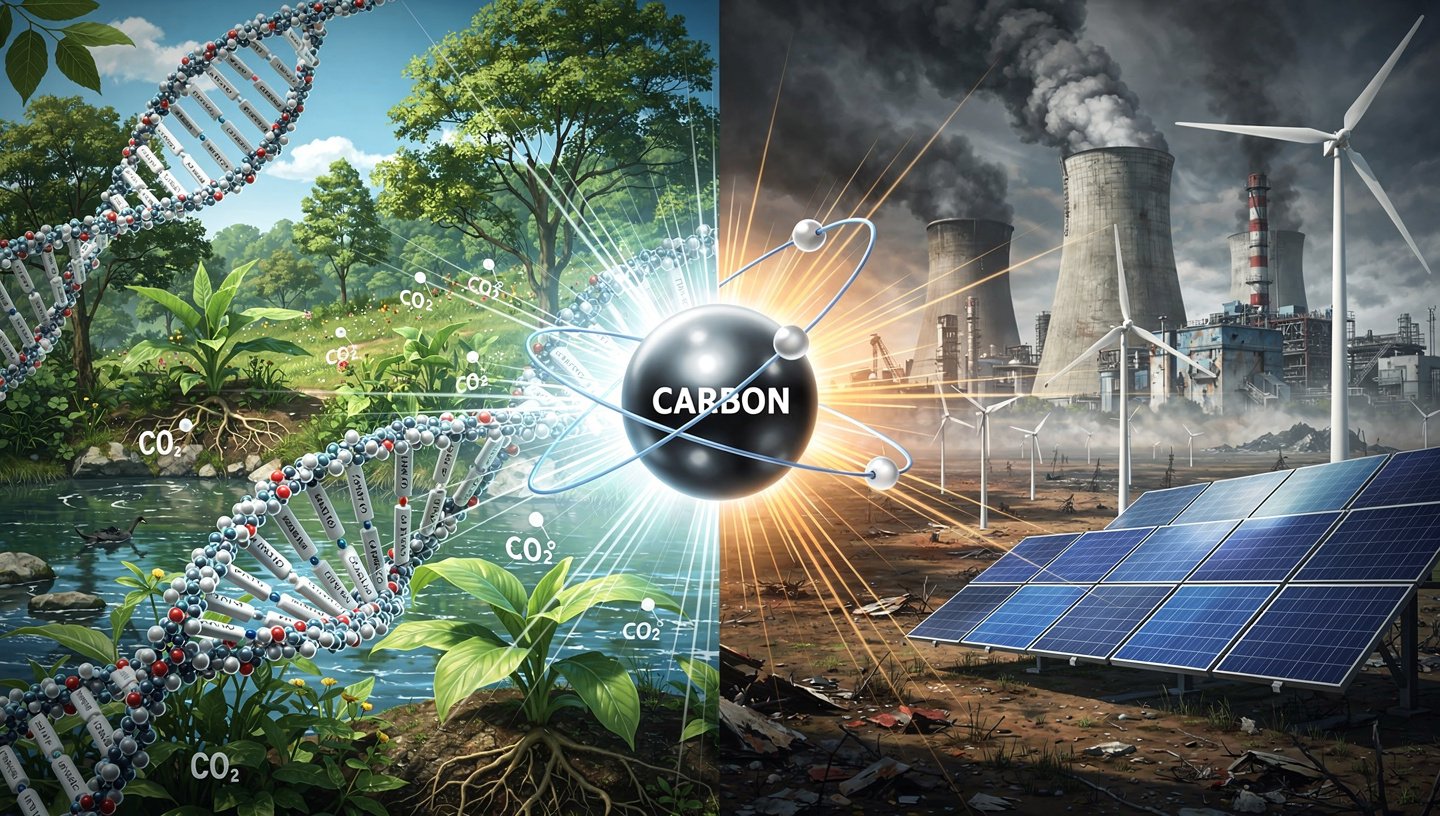
If you’ve ever held a pencil, eaten a bowl of rice, or seen vehicle exhaust on the road, you’ve already encountered carbon. Carbon is everywhere. In fact, a significant portion of the human body is made up of carbon. But what exactly is carbon?
In this article, we’ll explore carbon from the basics all the way to its role in energy, the environment, and our future. Don’t worry—we’ll keep it simple, practical, and engaging. 😉
-
What Is Carbon?
Carbon is a chemical element that plays a fundamental role on Earth. In chemistry, carbon has the symbol C and an atomic number of 6.
This means:
- Carbon has 6 protons.
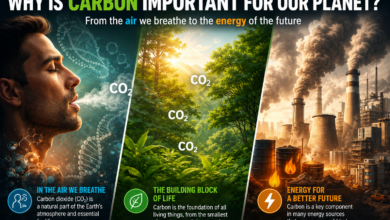
- Carbon is one of the essential building blocks of life.
Carbon is unique because it can:
- Bond with many other elements.
- Form long and complex chains, creating millions of different compounds.
That’s why carbon serves as the foundation of nearly all living organisms.
-
Why Is Carbon So Important?
Imagine a world without carbon:
- No humans
- No plants
- No food
- No fuels
Carbon is like the LEGO® brick of life.
In biology, every living thing is built from carbon-based compounds such as:
- Proteins
- Fats (lipids)
- Carbohydrates
- DNA
Without carbon, life as we know it simply wouldn’t exist. 😅
- Where Is Carbon Found?
The short answer: everywhere.
a. In Our Bodies
The human body is approximately 18% carbon by mass.
b. In Nature
Carbon exists in many parts of the natural environment:
- Atmosphere → as carbon dioxide (CO₂)
- Soil → as organic carbon
- Oceans → as dissolved carbon compounds
c. In Energy Resources
Carbon is a major component of:
- Coal
- Crude oil
- Natural gas
This is why carbon is so important to the energy sector—and why it plays a central role in environmental discussions.
-
Different Forms of Carbon
Carbon can appear in several forms, making it one of the most versatile elements on Earth
a. Solid Carbon
Examples include:
- Graphite (pencil lead)
- Diamond
Interestingly:
- Graphite is soft.
- Diamond is one of the hardest natural materials known.
Yet both are made entirely of carbon!
b. Carbon in Compounds
Carbon often combines with other elements to form compounds such as:
- CO₂ (carbon dioxide)
- CH₄ (methane)
- C₆H₁₂O₆ (glucose)
These are known as carbon compounds and are studied extensively in organic chemistry.
-
The Carbon Cycle
Carbon doesn’t stay in one place. It continuously moves through Earth’s systems in a process known as the carbon cycle.
Here’s a simplified version:
- Plants absorb CO₂ from the atmosphere.
- Animals eat plants.
- Organisms die and decompose.
- Carbon returns to the soil and atmosphere.
This cycle is closely connected to photosynthesis, the process by which plants use sunlight to convert CO₂ into energy-rich compounds.
-
Carbon and Energy
This is where carbon becomes especially relevant to the energy sector. 🔥
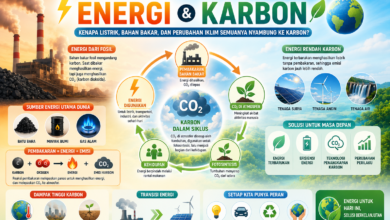
Carbon is a key component of fossil fuels:
- Coal
- Oil
- Natural gas
When these fuels are burned:
- Energy is released.
- Carbon dioxide (CO₂) is emitted.
This process powers many facilities around the world, including coal-fired power plants.
-
Carbon and Climate Change
Now we arrive at one of today’s most important topics.
Carbon-containing gases such as CO₂ are classified as:
- Greenhouse gases
These gases:
- Trap heat in the atmosphere.
- Contribute to global warming.
This phenomenon is known as the greenhouse effect.
When greenhouse gas concentrations become excessive, the impacts can include:
- Rising global temperatures
- Melting polar ice
- More extreme weather events
-
Carbon Neutrality and Net Zero
Because carbon emissions have significant environmental impacts, many countries and organizations are pursuing ambitious climate goals.
a. Carbon Neutrality
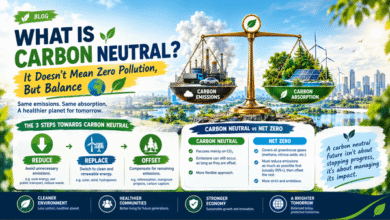
Carbon neutrality means:
Carbon emitted = Carbon removed or offset
b. Net Zero Emissions
Net zero refers to reducing greenhouse gas emissions as much as possible and balancing any remaining emissions through removal or offset measures.
This has become a major objective for governments and industries worldwide, including Indonesia.
-
How Can We Reduce Carbon Emissions?
There are many approaches to lowering emissions.
a. Renewable Energy
Examples include:
- Solar power
- Hydropower
- Wind energy
b. Energy Efficiency
Using energy more efficiently by:
- Reducing waste
- Improving technology
- Optimizing operations
c. Carbon Removal
Methods include:
- Reforestation
- Carbon capture technologies
- Soil carbon enhancement
-
Carbon in Everyday Life
Carbon isn’t only an industrial issue—we interact with it every day.
Examples:
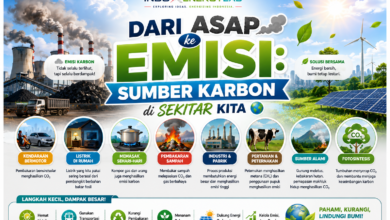
- Riding a motorcycle or driving a car
- Using electricity
- Producing and consuming food
All of these activities create a carbon footprint, which refers to the amount of greenhouse gases associated with a person, product, or activity.
-
Carbon in Industry
Carbon plays a major role across many industries
a. Energy
Carbon-based fuels remain a major source of global energy.
b. Materials
Carbon is involved in the production of:
- Plastics
- Steel
- Industrial chemicals
c. Data Centers
Interestingly, the digital economy also has a carbon footprint due to the significant electricity required to operate data centers and digital infrastructure.
-
Carbon and the Future
Today, the world is essentially negotiating its relationship with carbon.
The goal is not to eliminate carbon completely but to:
- Reduce unnecessary emissions
- Manage carbon responsibly
- Use carbon more efficiently
Examples include:
- Carbon trading
- Carbon credits
- ESG (Environmental, Social, and Governance) initiatives
Carbon is no longer just an environmental issue—it is increasingly an economic and business issue as well.
-
Fun Facts About Carbon 😄
- Diamonds and graphite are both made entirely of carbon.
- Carbon can form millions of different compounds.
- A significant portion of the human body is made of carbon.
- Nearly every food we eat contains carbon-based molecules.
-
Quick Summary
Carbon is:
- The foundation of life
- A major source of energy
- A key contributor to climate change when emissions become excessive
Carbon is like a knife:
- Extremely useful
- Potentially harmful if not managed responsibly
-
Final Thoughts
Carbon is not the enemy—but it’s not something we can ignore either.
We need carbon:
- To sustain life
- To produce energy
- To support technological development
At the same time, we must learn to manage it wisely.
Because the future of energy, the environment, and even the global economy depends on how effectively we understand and manage carbon today.
Carbon is more than just an element—it is one of the most important pieces of the story of our planet, our industries, and our future. 🌍⚡