If you were asked to name the most important element on Earth, the first thing that might come to mind is oxygen.
That makes sense — without oxygen, we cannot breathe.
However, there is another element that is often overlooked, even though its role is incredibly important: carbon.
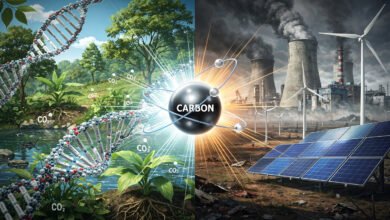
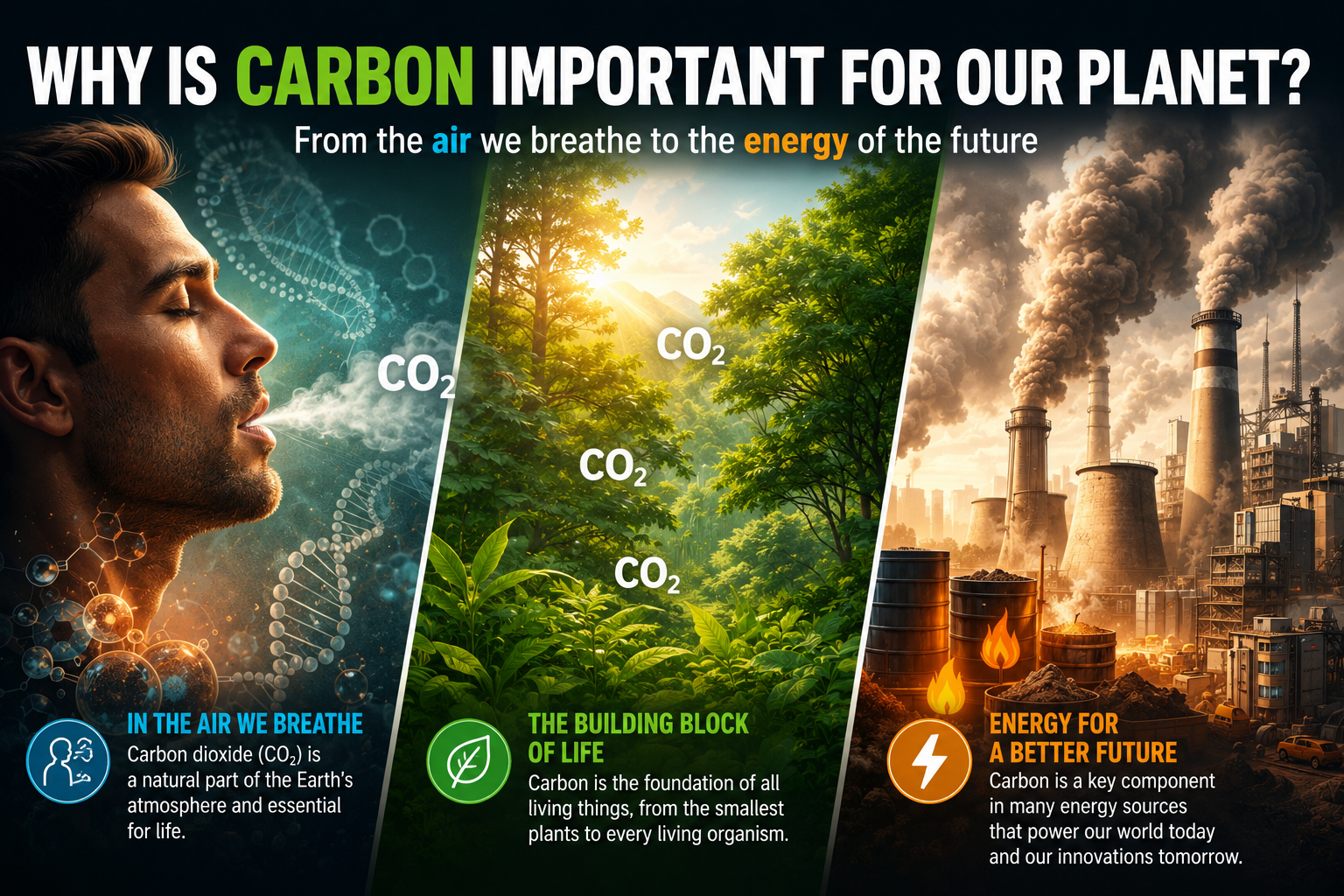
Carbon is not only about factory emissions or climate change. More than that, carbon is the foundation of life on Earth. Without carbon, there would be no humans, plants, animals, or even the food we eat every day.
In this article, we will explore in a simple but meaningful way why carbon is so important for Earth — from our bodies, ecosystems, energy systems, to the future of our planet.
1. Carbon: The “Lego” of Life
In Chemistry, carbon is an element with the symbol C and atomic number 6.
But don’t stop at that definition — what makes carbon special is its ability to form bonds with many other elements.
Imagine carbon as an extremely flexible Lego block:
• It can connect with other carbon atoms
• It can combine with hydrogen, oxygen, and nitrogen
• It can create simple structures or extremely complex ones
Because of this flexibility, carbon can form millions of different compounds.
That is why, in Biology, all living things are called carbon-based life.
2. Carbon Exists Inside Our Bodies
Believe it or not, the human body is approximately 18% carbon.
Carbon can be found in:
• Protein (building muscles)
• Fat (energy storage)
• Carbohydrates (main energy source)
• DNA (our genetic code)
This means:
👉 Carbon is not only important for Earth
👉 Carbon is directly important for us
Without carbon:
• Cells could not be formed
• Organs could not function
• Life would not exist
3. Carbon and the Food We Eat 🍚
Every time you eat:
• Rice
• Bread
• Chicken
• Vegetables
You are actually consuming carbon.
Why?
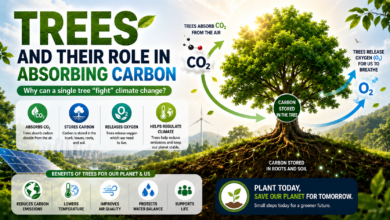
Because food comes from the process of photosynthesis, where plants:
• Absorb carbon dioxide (CO₂) from the atmosphere
• Convert it into energy (glucose)
Then:
• Animals eat plants
• Humans eat plants or animals
So carbon flows through a cycle:
Air → Plants → Animals → Humans
4. Carbon and the Cycle of Life (Carbon Cycle)
Carbon does not stay in one place.
It continuously moves through a system called the carbon cycle.
Simply:
1. CO₂ in the atmosphere is absorbed by plants
2. Plants are eaten by animals and humans
3. Living organisms breathe and release CO₂
4. When organisms die, carbon returns to the soil
This cycle helps maintain the balance of nature.
If this cycle is disrupted, the impact can be significant — one example is climate change.
5. Carbon Helps Maintain Earth’s Temperature 🌡️
Carbon also plays an important role in regulating Earth’s temperature.
Gases such as CO₂ are part of:
• Greenhouse gases
This phenomenon is known as the Greenhouse Effect.
How does it work?
• The sun heats Earth
• Some heat is reflected back into space
• CO₂ traps some of that heat, keeping Earth warm
Without carbon:
• Earth would become extremely cold
• Life would struggle to develop
So, carbon is actually beneficial and necessary — as long as its amount remains balanced.
6. The Problem Starts When Carbon Becomes Excessive
This is where the problem begins.
Since the industrial era:
• Coal combustion
• Oil consumption
• Large-scale industrial activities
have significantly increased CO₂ levels in the atmosphere.
The consequences:
• The greenhouse effect becomes stronger
• Earth’s temperature rises (global warming)
• Weather patterns become more unstable
This is what we know as the climate crisis.
7. Carbon and Energy 🔥
Carbon is also extremely important in the energy sector.
Most of the energy we use today comes from carbon-based fuels:
• Coal
• Oil
• Natural gas
In power plants such as Coal-Fired Power Plants (PLTU), carbon is burned to produce electrical energy.
The process:
Carbon + Oxygen → CO₂ + Energy
This energy is used to:
• Turn on lights
• Run machines
• Support industries
So, carbon is currently one of the world’s main energy sources.
8. Carbon in Ecosystems 🌱
Carbon is essential for maintaining ecosystem balance.
Examples:
a. Forests
• Absorb CO₂
• Store carbon inside trees
b. Oceans
• Absorb large amounts of carbon
• Act as natural carbon sinks
c. Soil
• Stores organic carbon
• Supports fertility
These ecosystems help control the amount of carbon on Earth.
9. Human Role in the Carbon Cycle
Humans have a major role — both positive and negative.
Negative impacts:
• Vehicle emissions
• Industrial activities
• Deforestation
Positive impacts:
• Reforestation
• Renewable energy
• Carbon capture technology
This means we are not only part of the problem, but also part of the solution.
10. Carbon and Climate Change 🌍🔥
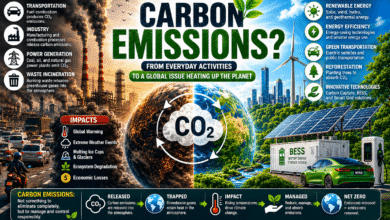
Carbon is one of the major factors behind climate change.
Its impacts include:
• Melting polar ice
• Rising sea levels
• Increasing extreme weather events
Countries like Indonesia are also affected:
• Floods
• Droughts
• Changing seasons
That is why carbon has become a global concern.
11. Carbon in the Modern World
Today, carbon is not only a scientific topic, but also related to:
a. Economy
• Carbon trading
• Carbon taxes
b. Technology
• Carbon capture
• Clean energy
c. ESG
(Environmental, Social, Governance)
Carbon has become part of global business strategies and policies.
12. Carbon and the Future of Energy ⚡
The world is currently working to:
• Reduce carbon emissions
• Transition to cleaner energy
Examples:
• Solar power (PLTS)
• Wind energy
• Hydrogen
However, carbon will not completely disappear.
What changes is: 👉 How we manage it
13. The Concept of Net Zero Emission
The global target today is:
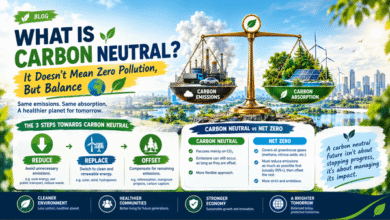
Net Zero Emission
Meaning:
• Carbon released = Carbon removed
Ways to achieve it:
• Reducing emissions
• Planting trees
• Using advanced technologies
14. Carbon in Everyday Life
Everyone has a carbon footprint.
Examples:
• Riding a motorcycle
• Using electricity
• Eating food
All these activities produce carbon emissions.
But we can reduce them by:
• Saving energy
• Using public transportation
• Reducing waste
15. Carbon Is Not the Enemy
Carbon is often considered “bad.”
But the reality is:
• Without carbon → no life
• Without carbon → no energy
The problem is not carbon itself, but:
👉 its amount and how we manage it
16. A Simple Analogy
Carbon is like fire:
• It can help us cook food
• But it can also burn a house
The key is:
👉 How we use it
17. Summary
Carbon is important for Earth because it:
• Forms the foundation of life
• Provides major energy sources
• Helps regulate Earth’s temperature
• Supports ecosystems
However:
• Too much carbon causes climate change
18. Closing
Carbon is one of the main “actors” on Earth.
It:
• Creates life
• Drives energy
• But can also cause damage
Our challenge today is not to eliminate carbon, but:
👉 to manage carbon wisely
Because the future of Earth — including energy, the environment, and human life — depends greatly on how we understand and manage carbon today