The Relationship Between Energy and Carbon ⚡🌍
Why Are Electricity, Fuel, and Climate Change All Connected to Carbon?
Whenever we talk about energy—whether it’s the electricity powering our homes, the gasoline fueling our vehicles, coal-fired power plants, or solar panels—we almost always end up discussing one thing:
👉 Carbon.
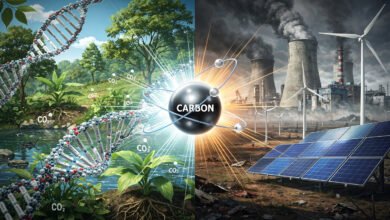
Today, carbon has become the “main character” in conversations about global energy.
Whether the topic is electricity, transportation, industry, or climate change, carbon is almost always part of the discussion.
But why?
Why is the electricity we use every day connected to carbon emissions?
Why is the world now focused on clean energy, net zero emissions, and the energy transition?
After all, humanity has relied on coal, oil, and natural gas for centuries without much concern.
In this article, we’ll explore the relationship between energy and carbon in a relaxed, easy-to-understand way—without becoming overly technical. Whether you’re just starting to learn about energy or already working in the industry, this guide is for you. 😉
Modern Energy Was Built on Carbon
Take a look at your daily life.
• The lights turn on.
• Your motorcycle runs.
• The air conditioner keeps the room cool.
• Factories operate.
• The internet stays online 24/7.
All of these activities require energy.
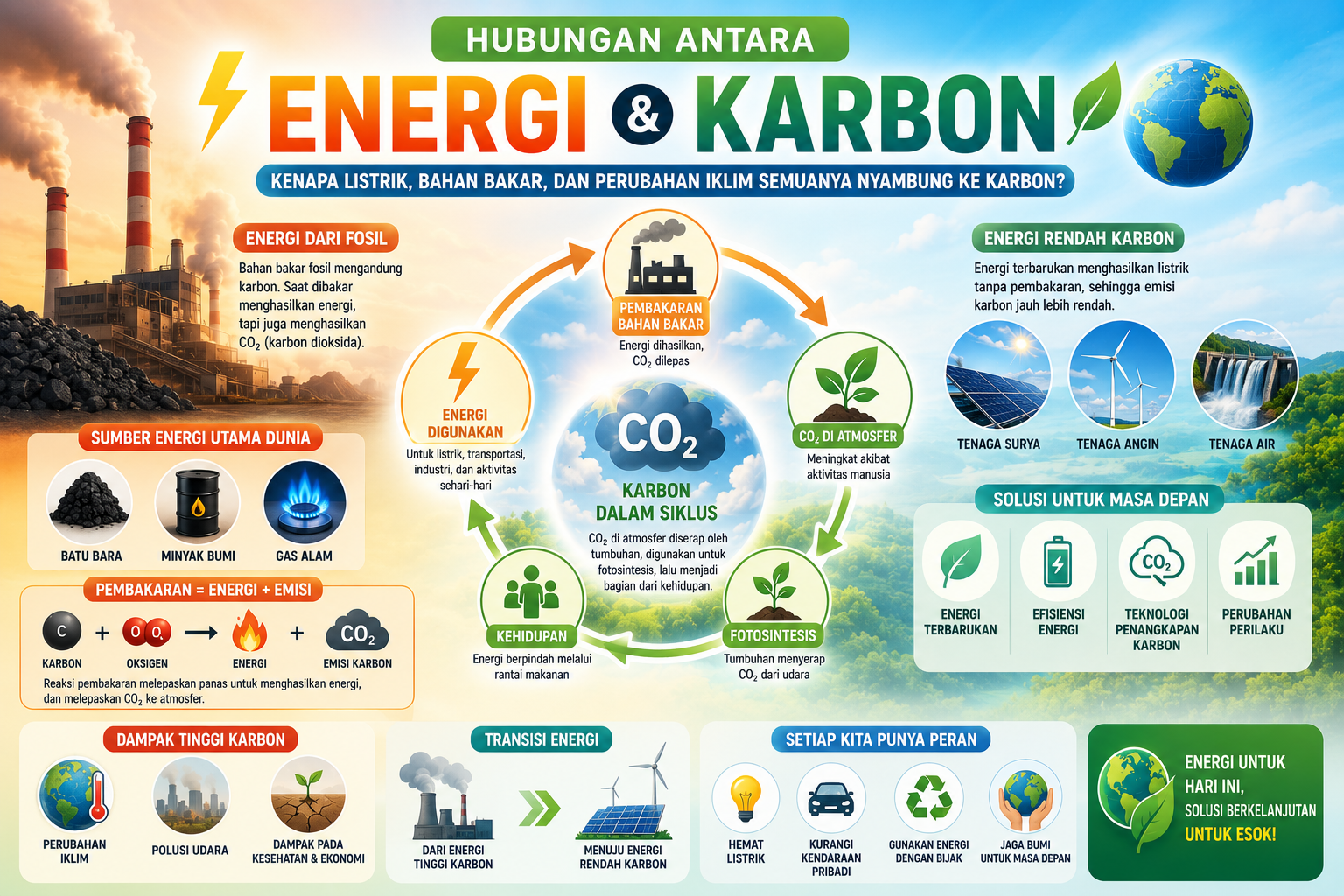
The challenge is that, for a very long time, most of the world’s energy has come from fuels that contain carbon, including:
• Coal
• Crude oil
• Natural gas
These are collectively known as fossil fuels.
Why are they called “fossil” fuels?
Because they originated from the remains of ancient plants and organisms that were buried beneath the Earth’s surface millions of years ago. Over vast periods of time, those organic materials transformed into carbon-rich compounds.
In other words, much of modern civilization has been powered by carbon that has been stored underground since prehistoric times.
Why Does Carbon Produce Energy?
This is the key concept.
Carbon releases energy because it reacts easily with oxygen during combustion.
When fuel burns:
• Carbon reacts with oxygen.
• Heat is released.
• Carbon dioxide (CO₂) is produced.
That heat is then converted into useful energy.
For example:
• In a car engine, heat from combustion drives the pistons.
• In a coal-fired power plant, heat turns water into high-pressure steam that spins a turbine.
• In a gas stove, heat is used for cooking.
This means that behind nearly every modern energy system lies one common process:
👉 The combustion of carbon-based fuels.
The Electricity We Use Has a Long Story Behind It
Most people think of electricity as something simple:
Plug in your charger → your phone charges.
But behind every electrical outlet is a long chain of energy conversion.
Let’s take a simple example: a coal-fired power plant.
The process looks like this:
• Coal is burned.
• Heat is produced.
• Water is converted into steam.
• Steam spins a turbine.
• The turbine drives a generator.
• The generator produces electricity.
It sounds straightforward.
But there’s an important side effect:
👉 Carbon dioxide is released into the atmosphere.
Whenever electricity is generated by burning fossil fuels, carbon emissions are usually produced as well.
Does Every Energy Source Produce Carbon?
This is where things become interesting.
Many people assume:
Using energy always means creating pollution.
But that’s not entirely true.
Coal-fired power plants produce significant carbon emissions.
However, there are also energy sources that generate little to no direct emissions during operation, such as:
• ☀️ Solar energy
• 🌬️ Wind energy
• 💧 Hydropower
• 🌋 Geothermal energy
These are known as renewable energy or low-carbon energy.
Because they don’t rely on burning fossil fuels, their operational carbon emissions are much lower.
Nature Uses Carbon Too
Interestingly, carbon isn’t limited to power plants and factories.
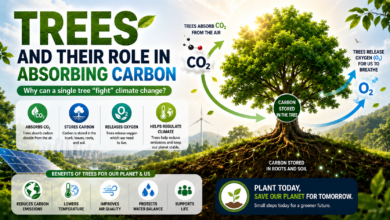
Nature itself runs on a carbon cycle.
Take photosynthesis, for example.
Plants absorb carbon dioxide (CO₂) from the atmosphere and use sunlight to convert it into food and stored energy.
That energy then moves through the food chain:
• Plants
• Animals
• Humans
Carbon is therefore a natural part of life on Earth.
The problem isn’t carbon itself.
The problem arises when humans release too much carbon into the atmosphere too quickly.
The World’s Dependence on Carbon-Based Energy
For centuries, humanity has depended heavily on fossil fuels.
And there are good reasons why.
Fossil fuels are:
• Relatively inexpensive
• Easy to store
• Easy to transport
• Supported by mature technologies
• Capable of producing large amounts of energy
Because of these advantages, coal, oil, and natural gas became the foundation of the Industrial Revolution and global economic growth.
However, this dependence also brought significant consequences:
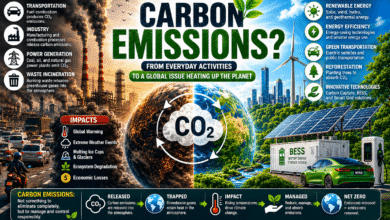
• Rising carbon emissions
• Poorer air quality
• Increasing global temperatures
When Carbon Became a Global Issue 🌡️
When carbon is released into the atmosphere as CO₂, it traps heat.
This phenomenon is known as the greenhouse effect.
The greenhouse effect itself is actually essential.
Without it, Earth would be too cold to support life.
The problem begins when atmospheric CO₂ concentrations become excessively high.
Too much heat becomes trapped, leading to:
• Rising global temperatures
• More extreme weather
• Melting polar ice
• Changing seasonal patterns
These changes are what we now recognize as global warming and climate change.
Indonesia Faces the Same Challenge
As a developing country, Indonesia is in a unique position.
On one hand, energy demand continues to grow because:
• Industry is expanding.
• More vehicles are on the road.
• Data centers are increasing.
• Electricity consumption continues to rise.
On the other hand, the world is pushing for lower carbon emissions.
The challenge is that Indonesia still relies heavily on coal to generate electricity.
So the real question isn’t simply:
“How do we reduce carbon?”
It’s:
How can we provide enough energy while preventing emissions from continuing to rise?
The World Is Entering the Energy Transition
This is why the term energy transition has become so common.
It refers to the global shift:
• From high-carbon energy sources
• Toward cleaner, lower-carbon alternatives
Examples include:
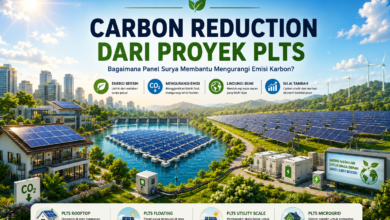
• Replacing coal-fired power plants with solar power plants
• Transitioning from gasoline vehicles to electric vehicles
• Expanding battery energy storage
• Deploying smart grids
This transformation won’t happen overnight.
The global energy system is enormous and highly complex.
But the direction is becoming increasingly clear.
Technology Is Becoming the Bridge Between Energy and Carbon
Fortunately, technology continues to advance.
Several promising solutions are emerging, including:
• Carbon Capture — capturing CO₂ before it enters the atmosphere
• Battery Energy Storage Systems (BESS) — storing clean energy for later use
• Smart Grids — making electricity distribution more efficient
Even modern data centers are increasingly powered by renewable energy to reduce their carbon footprint.
So… Should Carbon Be Eliminated?
The answer is:
Not entirely.
Carbon is not the enemy.
It is an essential part of:
• Life
• Industry
• Energy
• Even the human body
The real issue is excessive carbon emissions.
That’s why the world’s focus today isn’t on eliminating carbon altogether.
Instead, the goal is to:
• Reduce emissions
• Control emissions
• Manage carbon more responsibly
What Will the Future of Energy Look Like?
Based on current global trends, future energy systems are expected to become:
• Cleaner
• More digital
• More efficient
• Lower in carbon emissions
Today’s global objective is:
👉 Net Zero Emissions
This means the amount of greenhouse gases released should be balanced by the amount removed through natural processes or technological solutions.
We All Have a Role to Play
You might think:
“I’m not an energy company.”
But in reality, every one of us is connected to the energy system.
Through:
• Electricity consumption
• Transportation
• Lifestyle choices
• Daily energy use
Simple actions like:
• Conserving electricity
• Using energy more efficiently
• Reducing waste
…may seem small individually, but when millions of people do them together, they can create a significant impact.
Conclusion
Energy and carbon are deeply interconnected.
As long as humanity continues to require energy, carbon will likely remain an important part of the equation.
However, the world is learning an important lesson:
The future of energy is no longer just about producing as much electricity as possible.
It’s about producing energy in ways that are cleaner, smarter, and more sustainable.
Because in the end, the future of energy also shapes the future of our planet. 🌍