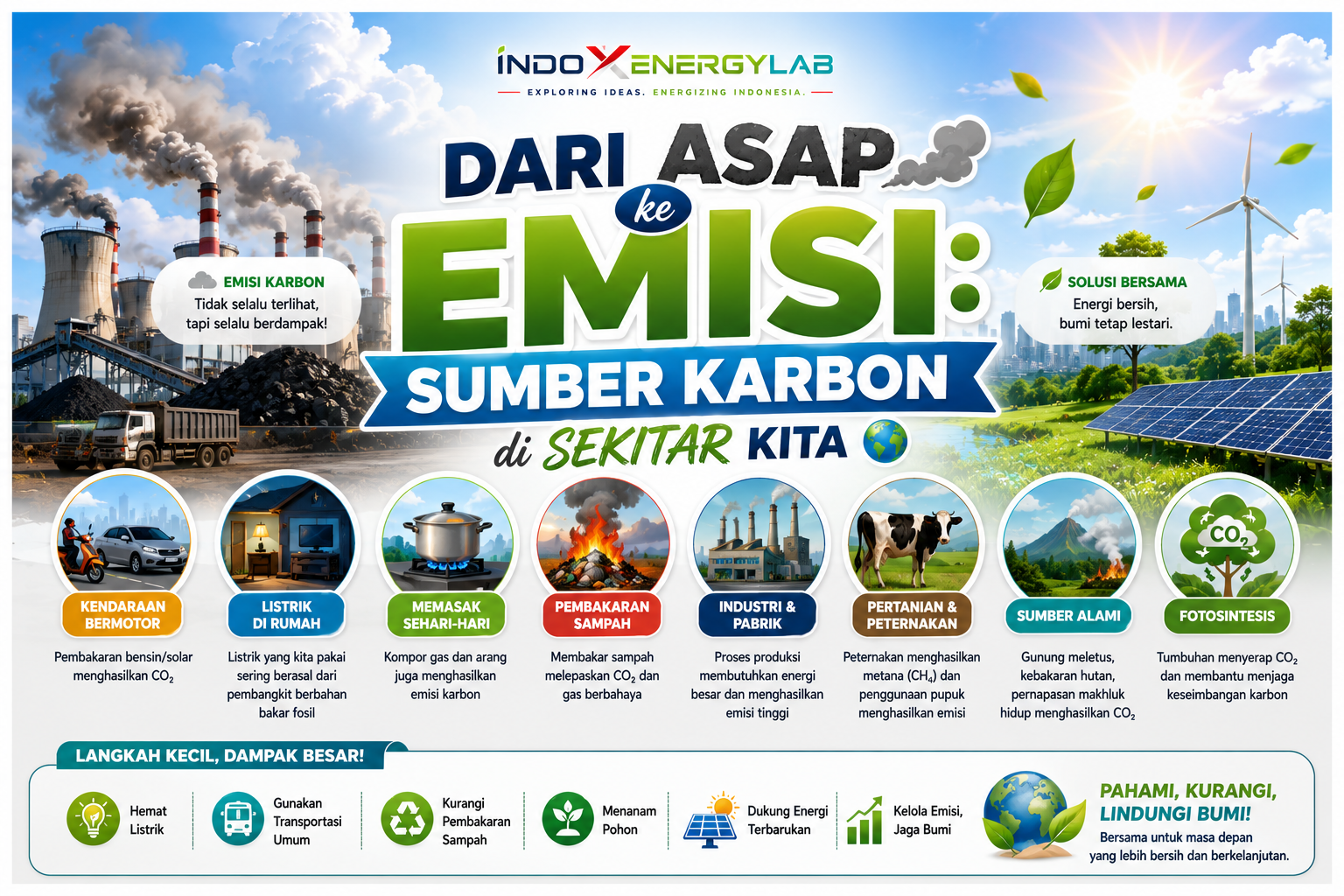
From Smoke to Emissions: Carbon Sources Around Us 🌍💨
When you see smoke coming from a motorcycle exhaust, a factory chimney, or burning trash, you’re probably looking at a source of carbon emissions.
But wait…
Does every carbon emission appear as visible smoke?
The answer is: not always.
Many carbon emissions are:
• Colorless
• Odorless
• Yet still have a significant impact on our planet
In this article, we’ll explore carbon sources—from the ones closest to our daily lives all the way to large-scale industries. We’ll keep it simple and easy to understand so you can see that carbon isn’t just “someone else’s problem”—it’s part of our everyday lives.
1. What Are Carbon Emissions?
Let’s start with the basics.
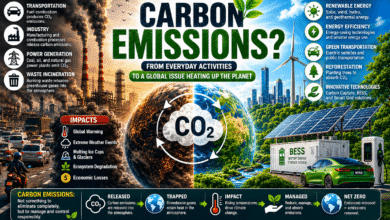
Carbon emissions are the release of carbon-containing gases into the atmosphere.
Some common examples include:
• Carbon dioxide (CO₂)
• Methane (CH₄)
In chemistry, these gases are produced through processes such as:
• Combustion
• Decomposition
• Biological reactions
Simply put:
👉 Carbon emissions are carbon gases released into the air.
2. From Smoke to Invisible Gases
Many people think:
👉 Carbon emissions = smoke
In reality:
• Smoke is visible.
• CO₂ is invisible.
So even if you don’t see smoke, carbon emissions may still be occurring.
For example:
• Running an air conditioner
• Using a laptop
• Turning on the lights
All of these activities produce a carbon footprint, even though no smoke is visible.
3. Carbon Sources Around Us
Now let’s look at the main question:
Where do carbon emissions come from in our daily lives?
A. Motor Vehicles 🚗
This is one of the closest and most familiar sources.
Whenever you:
• Ride a motorcycle
• Drive a car
Fuel such as gasoline or diesel is burned.
This process produces:
• Energy to move the vehicle
• CO₂ emissions released into the atmosphere
The more we drive,
👉 the more carbon emissions we generate.
B. Electricity at Home ⚡
Electricity looks clean, doesn’t it?
However, much of the electricity we use is still generated by power plants such as coal-fired power stations.
At these plants:
• Coal is burned
• Electricity is produced
• CO₂ is also released
So when we:
• Watch TV
• Charge our phones
We’re still indirectly connected to carbon emissions.
C. Everyday Cooking 🍳
Cooking also produces emissions.
For example:
Gas stoves release CO₂.
Charcoal produces carbon emissions when burned.
Although relatively small, these emissions occur regularly.
D. Burning Waste 🔥
Open waste burning is still common in many places.
When trash is burned:
• Plastic releases harmful gases.
• Organic waste releases CO₂.
If practiced continuously, this becomes a significant source of emissions.
E. Industry and Manufacturing 🏭
Industrial activities produce carbon emissions on a much larger scale.
Examples include:
• Cement plants
• Steel mills
• Oil refineries
These facilities consume enormous amounts of energy, resulting in substantial emissions.
F. Agriculture and Livestock 🌾🐄
This may surprise some people.
Livestock, especially cattle, produce:
• Methane (CH₄). Methane is an even more powerful greenhouse gas than CO₂ in trapping heat.
• Fertilizer use also contributes to carbon emissions.
G. Nature Also Produces Carbon
Carbon emissions don’t come only from human activities.
Natural sources include:
• Volcanic eruptions 🌋
• Naturally occurring wildfires
• Respiration by living organisms
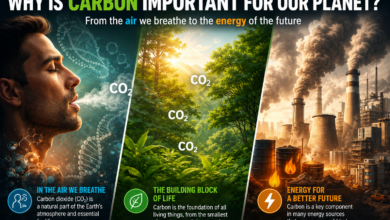
In biology, both humans and animals release CO₂ as they breathe.
4. The Role of Photosynthesis 🌱
Fortunately, nature also has a natural balancing mechanism.
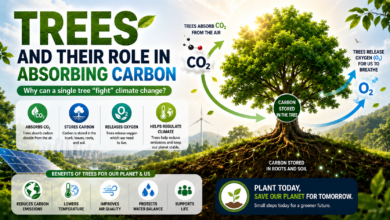
Through photosynthesis:
• Plants absorb CO₂.
• They convert it into oxygen and stored energy.
This process helps maintain Earth’s natural carbon balance.
5. Carbon Emissions We Often Don’t Notice
This is an important point.
Some everyday activities seem harmless but still generate emissions, including:
• Streaming videos 📱
• Shopping online 📦
• Using cloud services and data centers
Why?
Because all of these activities:
👉 require electricity, and electricity often comes from carbon-based energy sources.
6. Understanding Your Carbon Footprint 👣
Every activity we perform creates what’s known as a carbon footprint.
A carbon footprint is the total amount of carbon emissions generated by our activities.
The more energy we consume,
👉 the larger our carbon footprint becomes.
7. Carbon Emissions and the Greenhouse Effect 🌡️
Carbon emissions contribute to the greenhouse effect.
As greenhouse gases accumulate:
• Heat becomes trapped in the atmosphere.
• Earth’s average temperature rises.
When this happens excessively,
👉 global warming occurs.
8. From Small Scale to Large Scale
Carbon sources exist at every level.
Small scale:
• Households
• Individuals
Large scale:
• Industries
• Nations
This means:
👉 everyone contributes in some way.
9. Should We Stop All These Activities?
The answer is no.
Modern society still needs:
• Energy
• Transportation
• Industry
What we can do is:
👉 reduce emissions and manage them more responsibly.
10. Simple Ways to Reduce Carbon Emissions
We can start with simple everyday actions:
Save electricity
• Use public transportation
• Avoid burning waste
• Plant more trees
Do these seem like small actions?
Yes.
But when millions of people do them together,
👉 the impact becomes significant.
11. The Role of Technology
Technology is helping reduce carbon emissions through innovations such as:
• Renewable energy
• Electric vehicles
• Carbon capture technologies
The goal is simple:
👉 reduce emissions without sacrificing the energy society needs.
12. Indonesia and the Carbon Challenge
As a developing country, Indonesia faces several challenges:
• Growing energy demand
• Rising carbon emissions
• At the same time, enormous renewable energy potential
This presents both challenges and opportunities for the country’s energy transition.
13. A Simple Analogy
Think of carbon like dust.
• A small amount isn’t a problem.
• Too much becomes harmful.
The same applies to carbon emissions.
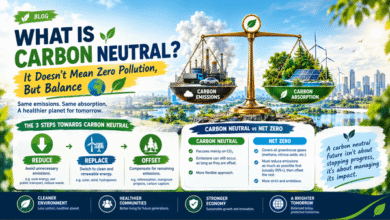
👉 The goal isn’t to eliminate carbon entirely, but to keep it under control.
14. Summary
Carbon emissions come from many sources, including:
• Transportation
• Electricity
• Industry
• Natural processes
Not all emissions are visible as smoke, but they still exist.
The real problem is:
👉 excessive emissions.
The solution is:
👉 responsible management and smarter energy use.
15. Conclusion
From vehicle exhaust to household electricity, from massive factories to our everyday activities—everything is connected to carbon.
Modern life depends heavily on energy, and much of that energy is still associated with carbon emissions.
The good news is:
👉 We can all start with small actions.
👉 We can all be part of the solution.
Understanding the carbon sources around us is the first step toward building a cleaner, healthier, and more sustainable future.