What Is a Data Center?
1. Have You Ever Heard the Term “Data Center”?
Have you ever come across the term data center while reading the news or watching technology videos?
You might think, “That’s probably something only IT people deal with.”
But every time you open YouTube, send a WhatsApp message, save photos to Google Drive, or stream a movie on Netflix, you’re actually using services that depend on data centers!
Yes, you read that right.
A data center is like the digital heart of the modern world.
If the internet is the body, then the data center is the vital organ that keeps everything alive, running, and connected.
So, before things get confusing, let’s start with the basics:
What exactly is a data center, why is it so important, and how does it work?
2. What Is a Data Center?
Let’s begin with the fundamentals.
A Data Center is a facility that houses thousands of computers and servers used to store, manage, and process data.
Think of it as a giant digital library.
In a traditional library, you find books.
In a data center, you find data from all over the world.
Examples include:
• Your Instagram profile picture
• TikTok videos you upload
• Emails from teachers, professors, or coworkers
• E-commerce transaction records when you shop online
All of this information is stored on servers located inside data centers.
3. What Does a Data Center Look Like?
If you’re imagining a small room with one giant computer, think again! 😄
Modern data centers can be enormous—some are as large as football fields.
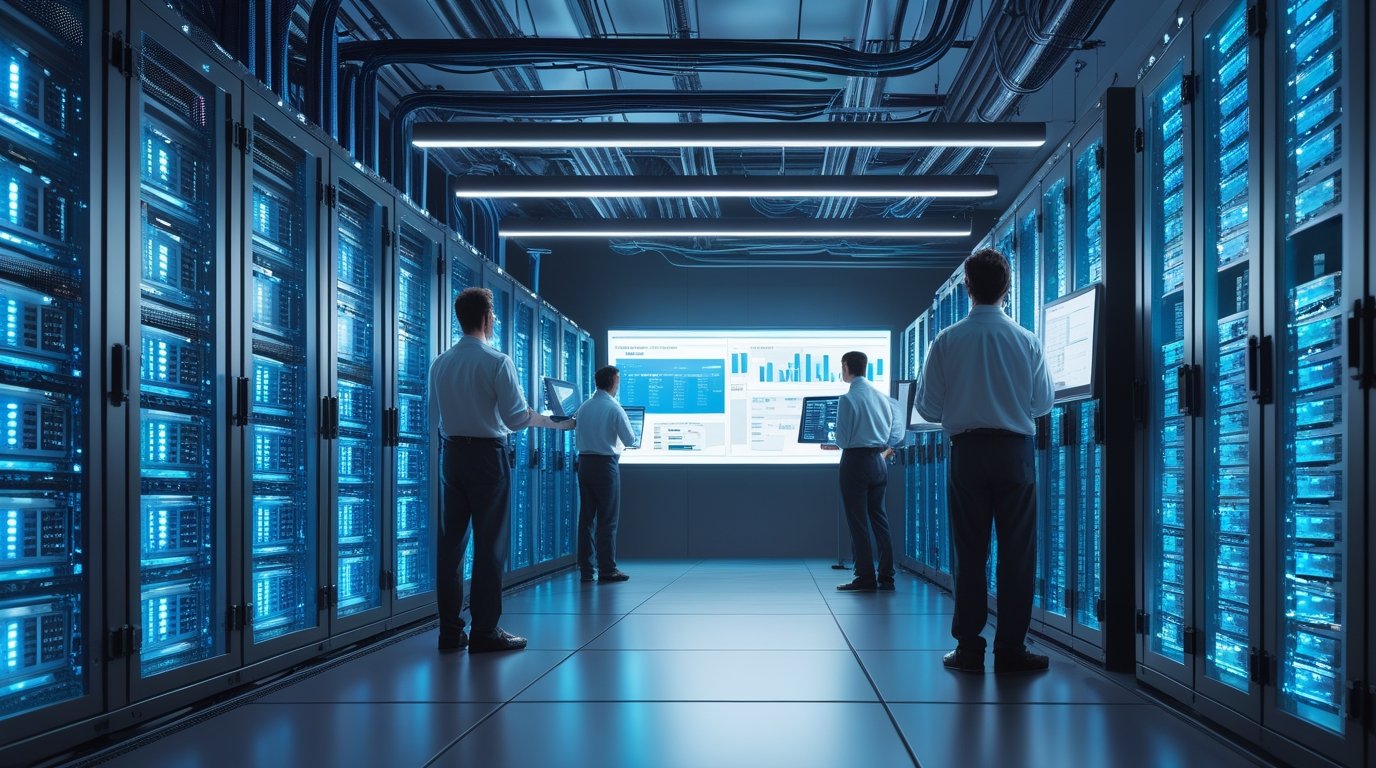
When you walk inside, you’ll see rows upon rows of tall metal racks filled with servers, known as server racks.
Each server is like a tiny brain working 24 hours a day, seven days a week.
Between the racks, you’ll notice blinking green and blue lights, indicating that data is constantly flowing in and out every second.
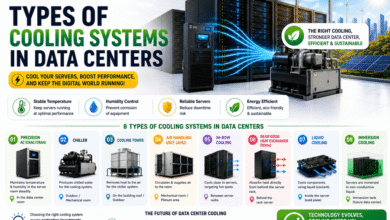
Data centers are also kept very cold.
Why?
Because servers generate a lot of heat when operating continuously.
That’s why every data center relies on sophisticated cooling systems, similar to air conditioning systems but much larger and more efficient.
4. What Are Data Centers Used For?
In simple terms, data centers are used to store and process data.
But their functions go far beyond that.
1. Data Storage
Digital files are safely stored here, including:
• Photos
• Videos
• Documents
• Corporate backups
2. Website and Application Hosting
Websites and applications such as Google, YouTube, and Tokopedia all run on servers located in data centers.
3. Data Processing
Data centers process massive amounts of information, often called big data.
Examples include:
• Weather forecasting
• Artificial Intelligence (AI)
• Customer analytics
4. Communication and Cloud Services
Services like Zoom, Gmail, and WhatsApp operate through the cloud.
And the cloud is really just a network of data centers distributed around the world.
5. Where Are Data Centers Located?
Data centers can be built almost anywhere, but they are usually not located in crowded city centers.
They are typically constructed in areas that are:
• Safe from floods and natural disasters
• Close to major power sources
• Connected to high-speed fiber-optic networks
In Indonesia, major data center hubs include:
• Jakarta – the primary data center hub close to major businesses and government institutions
• Bekasi & Cikarang – industrial zones with abundant land and excellent connectivity
• Batam – strategically located near Singapore for international connectivity
• Bali and Surabaya – emerging locations supporting tourism and digital business growth
6. Key Components Inside a Data Center
To better understand how a data center works, let’s look at its main components.
1. Server Room
The primary room where servers are housed.
2. Racks and Servers
Metal racks containing servers, routers, and storage devices.
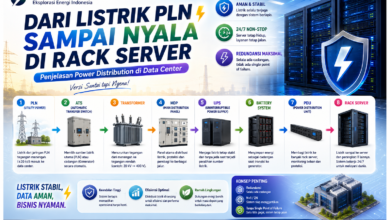
3. Power System
Data centers require reliable and uninterrupted electricity.
They typically use:
• UPS (Uninterruptible Power Supply)
• Backup diesel generators
to prevent outages.
4. Cooling System
Maintains temperatures between approximately 18°C and 25°C (64°F–77°F).
5. Network Equipment
Routers, switches, and firewalls manage data traffic.
6. Security and Monitoring Room
Operators monitor the entire facility through large displays, much like a command center in a science-fiction movie.
7. Why Are Data Centers So Important?
Imagine if every data center in the world suddenly went offline.
What would happen?
• Google would become inaccessible.
• Instagram would stop working.
• ATMs and online banking services would fail.
• Hospital, university, and business data could become unavailable.
Sounds chaotic, right?
That’s why data centers are considered critical digital infrastructure.
Without them, modern society would struggle to function.
8. Where Does the Electricity Come From?
Here’s something interesting.
Data centers consume enormous amounts of electricity. ⚡
A single facility can use as much power as thousands of homes.
Servers, cooling systems, networking equipment, and lighting all require energy around the clock.
Most data centers have:
• Dedicated utility connections
• Backup generators
• UPS battery systems
Many modern facilities are also adopting renewable energy sources such as:
• Solar power
• Wind power
to reduce their environmental impact.
This is one reason why ESG (Environmental, Social, and Governance) principles are becoming increasingly important in the data center industry.
9. Types of Data Centers
There are several categories of data centers.
1. Enterprise Data Center
Owned and operated by a single organization, such as:
• Banks
• Utilities
• Telecommunications companies
2. Colocation Data Center
Companies rent space, power, and connectivity from third-party operators.
3. Cloud Data Center
Used by cloud providers such as:
• Google Cloud
• Amazon Web Services (AWS)
• Microsoft Azure
4. Hyperscale Data Center
Massive facilities capable of housing hundreds of thousands of servers.
Typically operated by technology giants such as:
• Meta
• Google
• Alibaba Cloud
10. Who Works in a Data Center?
Data centers are not managed solely by IT professionals.
Many different specialists are involved, including:
• Network Engineers – manage connectivity and networking infrastructure
• Electrical Engineers – oversee power systems and backup infrastructure
• Mechanical Engineers – manage cooling and HVAC systems
• Security Officers – protect physical assets and access points
• Facility Managers – coordinate daily operations
• Energy Marshals and Sustainability Officers – improve energy efficiency and sustainability performance
Modern data centers are like a combination of a power plant and a technology laboratory.
11. What Is a Data Center Tier?
You may have heard terms such as:
• Tier I
• Tier II
• Tier III
• Tier IV
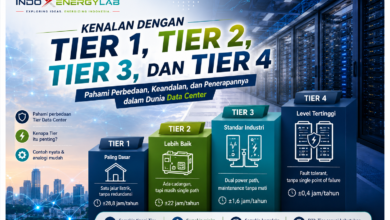
These are not game levels 😄
They are reliability classifications developed by the Uptime Institute.
Tier I
Basic infrastructure with a single power and cooling path.
Tier II
Includes some redundant components but still has limitations during maintenance.
Tier III
Fully redundant infrastructure allowing maintenance without shutting down operations.
Tier IV
The highest level of reliability with fault-tolerant systems and approximately 99.99% uptime.
Several Indonesian facilities have achieved Tier IV certification, meaning they can operate with extremely high reliability.
12. How Do Data Centers Stay Secure?
Data is often described as the new gold.
If sensitive information is compromised, the consequences can be severe.
That’s why security is a top priority.
Physical Security
• Restricted access
• Biometric authentication
• Access cards
• Facial recognition
• 24/7 CCTV surveillance
• Airlock-style entry systems
Cybersecurity
• Firewalls
• Encryption technologies
• Continuous monitoring from a Network Operations Center (NOC)
• Disaster recovery sites for backups
In short, data centers are protected like high-security fortresses.
13. Data Centers vs. Cloud: What’s the Difference?
Many people confuse data centers and cloud computing.
The two are closely related but not the same.
• Data Center = the physical facility (building + servers)
• Cloud = the digital services running on top of those facilities
Think of it this way:
A cloud service is the restaurant.
The data center is the kitchen.
Customers see the restaurant, but the actual work happens behind the scenes in the kitchen.
14. Environmental Impact of Data Centers
As mentioned earlier, power consumption and cooling requirements can create a significant carbon footprint.
As a result, many operators are investing in greener solutions:
• Rooftop solar panels
• Energy-efficient cooling technologies
• Waste heat recovery systems
• LEED-certified green buildings
The future trend is the Green Data Center—facilities that are energy-efficient, sustainable, and environmentally responsible.
15. Indonesia’s Digital Future and Data Centers
Indonesia is rapidly expanding its digital infrastructure.
With more than 270 million people and over 210 million internet users, data demand continues to grow every year.
The government has introduced initiatives such as Indonesia Digital 2045, which emphasizes data sovereignty—the idea that Indonesian data should be stored within Indonesia whenever possible.
As a result, global technology companies including Google, Microsoft, Amazon, and Huawei are investing in local data center infrastructure.
16. Data Centers and the Future of Energy
A new term has emerged:
“Energy-Hungry Data Centers”
because of their substantial electricity requirements.
At the same time, they are becoming centers of innovation.
Emerging ideas include:
• Underwater data centers
• AI-driven cooling optimization
• Integration with solar energy and battery storage
• Liquid cooling technologies
Some concepts are even exploring the use of waste heat from data centers to provide district heating for cities.
17. Challenges Facing Data Centers in Indonesia
Despite strong growth prospects, several challenges remain:
1. High electricity demand requiring reliable grid supply
2. Tropical climate conditions that increase cooling requirements
3. Uneven internet infrastructure across the country
4. Complex regulations and permitting processes
5. Limited availability of highly specialized talent
These challenges also create opportunities for the next generation of Indonesian professionals.
18. A Simple Analogy: Data Centers Are the Brain of the Internet
If the internet were a human body, the data center would be its brain.
Every message, search, transaction, and online interaction is stored and processed there.
When you send a message:
Signal → Data Center → Processing → Delivery
Without data centers, the digital world would simply stop functioning.
19. What Can We Learn From Data Centers?
Data centers are not just about computers and servers.
They are essential infrastructure that supports modern life.
The future of:
• Work
• Business
• Education
• Energy
• Technology
will all depend on data and the facilities that manage it.
In the past, electricity powered industrial growth.
Today, data powers the digital economy.
20. Conclusion
So, if someone asks:
“What is a data center?”
You can simply answer:
“A data center is a facility where the world’s digital information is stored, processed, and protected so the internet can keep running.”
From social media posts to online banking and movie streaming, almost every digital activity depends on data centers.
Most people never see them, but their role is enormous.
And who knows?
One day, you might become part of the team responsible for keeping Indonesia’s digital heart beating—efficiently, sustainably, and reliably.