Solar Power Plants (PLTS): Turning Sunlight into Electricity From Sunlight to the Energy That Powers Homes, Schools, and Cities
Have you ever wondered where the electricity we use every day comes from?
When we turn on a light, charge a phone, watch television, or use a computer, all of these activities require electricity. For many years, most electricity has been generated by power plants that burn fossil fuels such as coal, oil, and natural gas.
Today, however, the world is moving toward cleaner and more sustainable energy sources. One of the fastest-growing technologies is the Solar Power Plant, commonly known in Indonesia as PLTS (Pembangkit Listrik Tenaga Surya).
A solar power plant uses sunlight to generate electricity without producing smoke or carbon emissions during operation.
What makes this technology even more interesting is that its energy source—the sun—is available for free every day.
But how can sunlight become electricity?
Does a solar panel store heat from the sun?
Why can a solar panel generate electricity without any moving parts?
Let’s explore the answers in a simple and easy-to-understand way.
The Sun: The Largest Energy Source in Our Solar System
Before learning about solar power plants, we first need to understand their energy source: the sun.
The sun is a star located at the center of our solar system. It produces an enormous amount of energy through nuclear reactions taking place deep inside its core.
This energy is released into space in the form of:
• Light
• Heat
• Electromagnetic radiation
A small portion of that energy reaches Earth.
Even though only a tiny fraction reaches our planet, the amount is still enormous.
In fact, the solar energy reaching Earth in just one hour is enough to meet the world’s energy needs for an entire year.
This is why scientists consider solar energy one of the most promising energy sources for the future.
What Is a Solar Power Plant (PLTS)?
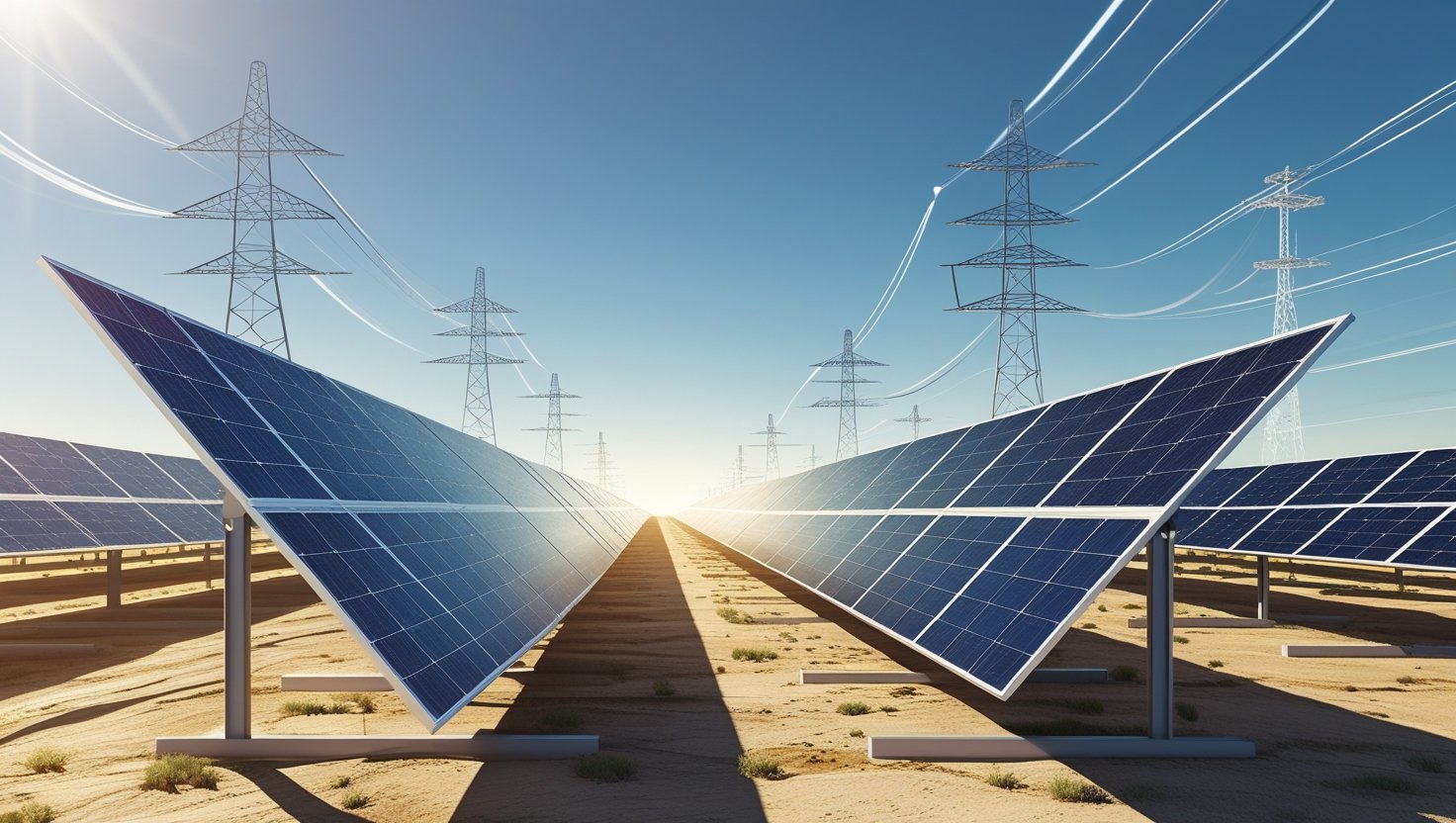
A Solar Power Plant (PLTS) is a system that converts sunlight into electricity using devices called solar panels.
In simple terms:
Sunlight
↓
Solar Panels
↓
Electricity
There is:
• No fuel combustion
• No smoke
• No daily fuel purchases
As long as sunlight is available, solar panels can produce electricity.
What Is a Solar Panel?
Many people think a solar panel is the device that directly generates electricity.
In reality, a solar panel consists of many smaller units called solar cells.
Solar cells are the components that actually convert sunlight into electricity.
A single solar panel may contain dozens or even hundreds of solar cells connected together.
If you look closely at a solar panel, you’ll notice many small blue or black squares.
Those squares are the solar cells.
What Is a Solar Cell?
A solar cell is an electronic device that converts light energy into electrical energy.
Most solar cells are made from a material called silicon.
Silicon is also used in:
• Computers
• Smartphones
• Microchips
• Other electronic devices
One reason silicon is so useful is its ability to control the movement of electrons.
This property makes it ideal for solar energy applications.
How Does Sunlight Become Electricity?
This is the most fascinating part of solar power technology.
The process of converting sunlight into electricity is called the photovoltaic effect.
Although the name sounds complicated, the concept is actually quite simple.
Let’s break it down step by step.
Step 1: Sunlight Reaches the Solar Panel
The sun emits tiny packets of energy called photons.
When photons hit the surface of a solar cell, their energy is absorbed by the silicon material.
Step 2: Electrons Become Energized
Inside the silicon are tiny particles called electrons.
When photons transfer energy to these electrons, the electrons become energized and start moving.
This movement is the foundation of electricity generation.
Step 3: Electrical Current Is Created
Solar cells are designed so that electrons move in a specific direction.
When many electrons move together, they create an electrical current.
This flow of electrons is what we call electricity.
Step 4: Electricity Leaves the Solar Panel
The electricity generated by solar panels is called:
Direct Current (DC)
This DC electricity is then sent to other components for further processing.
Why Don’t Solar Panels Generate Electricity at Night?
The answer is simple: solar panels need sunlight.
At night:
• There is no sunlight.
• No photons reach the solar cells.
• Electrons are not energized.
As a result, solar panels stop producing electricity.
This is one reason why many modern solar systems use batteries or remain connected to the electrical grid.
Do Solar Panels Use Heat from the Sun?
This is one of the most common misconceptions.
Solar panels do not generate electricity from heat.
They generate electricity from light.
This means solar panels can still produce electricity on cold days as long as sunlight is available.
In fact, solar panels often perform better in cooler temperatures than in extremely hot conditions.
Main Components of a Solar Power Plant
A solar power system consists of more than just solar panels.
Several important components work together to generate usable electricity.
- Solar Panels
Solar panels capture sunlight and convert it into DC electricity.
They are the heart of the solar power system. - Inverter
The electricity produced by solar panels is DC.
However, most household appliances use Alternating Current (AC).
An inverter converts DC electricity into AC electricity.
DC Electricity
↓
Inverter
↓
AC Electricity - Cables and Connectors
Cables carry electricity between system components.
Connectors link multiple solar panels together. - Mounting Structure
Solar panels need strong support structures to remain secure.
These structures are usually made from:
• Aluminum
• Galvanized steel - Battery (Optional)
Some solar systems include batteries to store excess electricity.
Stored energy can then be used during nighttime or cloudy weather.
How Does Energy Flow Through a Solar Power Plant?
The energy flow is quite simple:
☀ Sunlight
↓
Solar Panels
↓
DC Electricity
↓
Inverter
↓
AC Electricity
↓
Home / School / Factory
If batteries are included:
☀ Sunlight
↓
Solar Panels
↓
Battery Storage
↓
Inverter
↓
Electrical Loads
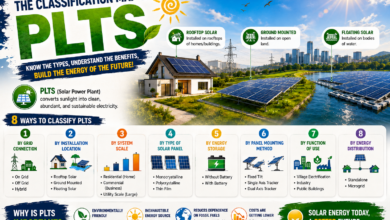
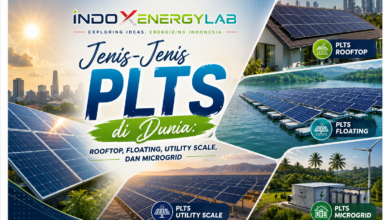
Types of Solar Power Plants
Not all solar systems are the same.
Several different types are commonly used around the world.
- Rooftop Solar Systems
Rooftop solar systems are installed on building roofs.
Examples include:
• Houses
• Schools
• Offices
• Factories
They are especially common in urban areas. - Utility-Scale Solar Farms
Utility-scale solar farms are very large solar power plants.
They are built on large areas of land and supply electricity directly to the power grid.
Their capacity can range from tens to hundreds of megawatts. - Floating Solar Power Plants
Floating solar systems are installed on bodies of water such as:
• Reservoirs
• Lakes
• Water treatment ponds
This technology is becoming increasingly popular because it does not require large areas of land. - Off-Grid Solar Systems
Off-grid systems operate independently and are not connected to the utility grid.
They usually rely on batteries for energy storage. - On-Grid Solar Systems
On-grid systems are connected directly to the electrical grid.
When solar production is insufficient, electricity can be drawn from the grid.
When solar production exceeds demand, excess electricity may be exported back to the grid.
Advantages of Solar Power Plants
Why are countries investing heavily in solar energy?
Because solar power offers many benefits.
- Renewable Energy
The sun will continue shining for billions of years.
This makes solar energy a renewable resource. - Environmentally Friendly
Solar power plants produce no smoke or direct carbon emissions during operation.
This helps reduce the impact of climate change. - Low Operating Costs
Once installed, solar systems typically require relatively low operating and maintenance costs. - Flexible Installation
Solar power systems can be installed in many locations:
• Homes
• Schools
• Office buildings
• Factories
• Reservoirs
Challenges of Solar Power Plants
Despite their many benefits, solar systems also face challenges.
- Weather Dependence
Electricity production depends on sunlight availability.
Cloudy and rainy conditions reduce energy output. - No Nighttime Production
Solar panels stop generating electricity after sunset. - Land Requirements
Large solar farms require significant installation space.
The Future of Solar Energy
Solar technology continues to improve rapidly.
Solar panels are becoming:
• More efficient
• More affordable
• More durable
Battery storage systems are also improving, allowing solar energy to be stored and used when needed.
Many countries have ambitious plans to expand solar energy as part of their clean energy transition.
Countries located near the equator, such as Indonesia, have especially strong solar energy potential because they receive sunlight throughout the year.
As technology advances and energy policies evolve, solar power is expected to become one of the world’s most important sources of electricity.
Conclusion
A Solar Power Plant (PLTS) is a technology that converts sunlight into electricity using solar panels.
This process occurs through the photovoltaic effect, where sunlight energizes electrons inside solar cells, creating an electrical current.
The electricity is then processed through an inverter and used to power homes, schools, businesses, and industries.
Because solar energy is clean, renewable, and increasingly affordable, it plays a major role in the global transition toward a more sustainable energy future.
Every time we see a solar panel facing the sun, we are witnessing one of humanity’s most remarkable technologies: a system capable of transforming light from a star located approximately 150 million kilometers away into the electricity that powers our daily lives. 🌞⚡