PPE (Personal Protective Equipment): Types and Functions
Imagine you’re working on a construction site.
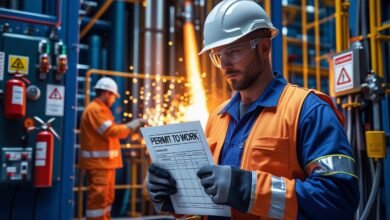
Someone is cutting steel. Another person is welding. Someone else is working at height, while another is handling electrical cables.
At first glance, everything looks normal. But in reality…
👉 Every one of these jobs comes with risks.
• Sparks can hit your eyes.
• Falling objects can strike your head.
• Dust can enter your lungs.
• Electricity can cause severe electric shock.
Now imagine one more thing:
👉 You’re doing all of that… without any protective equipment. Sounds terrifying, doesn’t it?
This is exactly why Personal Protective Equipment (PPE) is so important.
The most fundamental legal basis in Indonesia is:
👉 Law No. 1 of 1970 on Occupational Safety, which states that:
• Employers are required to provide PPE.
• Workers are required to wear PPE.
• Every workplace must ensure the safety of its workers.
What Is PPE?
Simply put:
👉 Personal Protective Equipment (PPE) is equipment designed to protect workers from hazards in the workplace.
PPE isn’t for fashion.
It’s not just a formality.
It exists for one reason:
👉 To keep us safe.
Why Is PPE Important?
In industries such as:
• Energy
• Oil & Gas
• Construction
• Manufacturing
• Data Centers
• Mining
• And many others
…hazards are always present.
Even when:
• Standard Operating Procedures (SOPs) are in place,
• Workers have received proper training,
• Toolbox meetings are held regularly,
👉 Risk can never be completely eliminated.
This is where PPE becomes the last layer of protection.
An Important Concept: “The Last Line of Defense”
In the world of Health, Safety, and Environment (HSE), there is a concept called the Hierarchy of Controls.
The hierarchy is:
1. Elimination (Remove the hazard)
2. Substitution (Replace it with a safer alternative)
3. Engineering Controls
4. Administrative Controls
5. Personal Protective Equipment (PPE)
Notice that PPE is the last level.
This means:
👉 If every other control fails, PPE is what protects you.
That’s why PPE should never be underestimated.
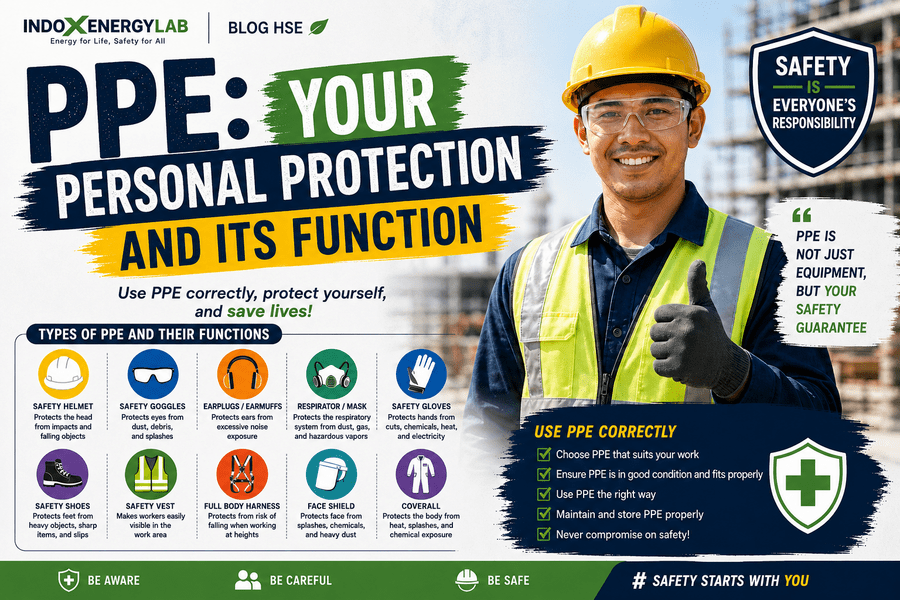
Common Types of PPE
1. Safety Helmet
Function
Protects the head from:
• Falling objects
• Impact
• Flying debris
Example
A bolt falls from above.
With a helmet:
👉 You walk away safely.
Without one:
👉 The consequences could be fatal.
2. Safety Glasses
Your eyes are among the most delicate organs in your body.
Function
Protects the eyes from:
• Dust
• Flying sparks
• Metal fragments
Example
Grinding metal without safety glasses.
👉 A tiny metal particle could permanently damage your eye.
3. Face Shield
A face shield provides broader protection than safety glasses.
Function
Protects the entire face from:
• Chemical splashes
• Sparks
• Heavy dust
Commonly used during:
• Grinding
• Cutting
• Chemical handling
4. Mask or Respirator
Respiratory protection is especially important in dusty or hazardous environments.
Function
Protects against:
• Dust
• Hazardous gases
• Chemical vapors
Types
• Disposable dust masks (for low-risk environments)
• Respirators (for higher-risk exposures)
5. Safety Gloves
Our hands are our primary working tools.
Function
Protects against:
• Cuts
• Heat
• Chemicals
• Electrical hazards (with specialized gloves)
Common Types
• Cut-resistant gloves
• Heat-resistant gloves
• Chemical-resistant gloves
• Electrical insulating gloves
6. Safety Shoes
Never underestimate the importance of safety footwear.
Function
Protects feet from:
• Falling heavy objects
• Nails and sharp objects
• Slippery surfaces
Typical features include:
• Steel toe cap
• Slip-resistant sole
• Puncture-resistant midsole
7. High-Visibility Safety Vest
You know those bright-colored reflective vests?
Function
Makes workers highly visible.
Essential in areas such as:
• Construction sites
• Road work
• Heavy equipment operating zones
8. Earplugs and Earmuffs
Necessary when working in noisy environments.
Function
Protects hearing from:
• High noise levels
Without hearing protection:
👉 Permanent hearing loss can occur.
9. Full Body Harness
Designed for working at height.
Function
Prevents serious injury from falls.
If a fall occurs:
👉 The harness arrests the fall and supports the worker.
10. Coveralls / Protective Clothing
Function
Protects the body from:
• Heat
• Flames
• Chemicals
• Dirt and contaminants
Why Do Many Workers Still Ignore PPE?
This is a common reality in many workplaces.
Even though workers understand its importance, many still choose not to wear PPE.
Why?
1. It’s Uncomfortable
• Too hot
• Too heavy
• Makes you sweat
👉 This is the most common reason.
2. “I Don’t Need It”
People often think:
“It’s only a quick job.”
But accidents can happen within seconds.
3. Overconfidence
“I’ve always done it this way.”
👉 This is a dangerous mindset.
4. Lack of Supervision
When nobody checks,
👉 People become careless.
5. Poorly Fitting PPE
• Wrong size
• Low-quality equipment
👉 Workers become reluctant to wear it.
Consequences of Not Wearing PPE
These aren’t just theoretical—they happen every day.
Minor Injuries
• Cuts
• Bruises
• Skin irritation
Serious Injuries
• Eye damage
• Broken bones
• Burns
Permanent Disabilities
• Vision loss
• Hearing loss
Fatalities
This is the worst outcome.
And in many cases…
👉 It could have been prevented simply by wearing PPE.
How to Use PPE Correctly
Simply wearing PPE isn’t enough.
👉 It must be used correctly.
1. Choose the Right PPE
Select PPE based on:
• The task
• The hazards involved
2. Inspect Before Use
Never use PPE that is:
• Damaged
• Cracked
• Expired
3. Wear It Properly
For example:
• Fasten your helmet chin strap.
• Adjust your harness correctly.
4. Never Modify PPE
Don’t:
• Drill holes in your helmet.
• Alter safety equipment.
Modifications can reduce its protective performance.
5. Store It Properly
PPE also requires proper maintenance and storage.
The Role of HSE and Supervisors
PPE is not only the worker’s responsibility.
It is also the responsibility of:
• HSE personnel
• Supervisors
• Management
Their responsibilities include:
• Providing appropriate PPE
• Delivering training
• Conducting inspections and supervision
How to Encourage Workers to Wear PPE
Simply forcing people to wear PPE isn’t always effective.
Better approaches include:
1. Education
Explain:
👉 Why PPE matters.
2. Share Real-Life Incidents
Actual accident stories often have a much stronger impact.
3. Involve Workers
Ask for their feedback and concerns.
4. Provide Comfortable PPE
Comfort significantly improves compliance.
5. Be Consistent
Safety rules should apply every day—not only during inspections or audits.
PPE and Safety Culture
PPE is more than just equipment.
It is part of a strong Safety Culture.
When a workplace has a positive safety culture:
👉 People wear PPE because they genuinely value safety—not because someone is watching.
A Simple Case Study
Imagine two workers.
Worker A
• Wears full PPE
• Follows procedures
Worker B
• Doesn’t wear PPE
• Feels overconfident
A minor accident occurs.
👉 Worker A walks away unharmed.
👉 Worker B suffers an injury.
Common PPE Mistakes
Be careful of these common errors:
• Wearing a helmet without fastening the chin strap
• Wearing a mask below the nose or chin
• Wearing a harness without attaching the lanyard to an anchor point
👉 These mistakes are almost the same as not wearing PPE at all.
Practical Safety Tips
If You’re a Worker
• Inspect your PPE before every job.
• Never compromise on safety.
• Remember: your family is waiting for you at home.
If You’re a Supervisor
• Never get tired of reminding people.
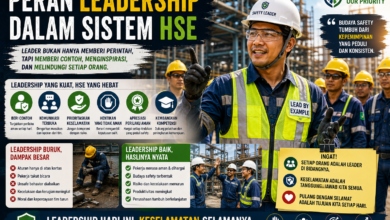
• Lead by example.
• Be firm—but fair.
Conclusion
PPE may seem simple.
Just:
• A helmet
• Safety shoes
• Gloves
• Safety glasses
• A mask
But their impact is enormous.
👉 They can save lives.
Don’t wait for an accident before realizing their importance.
Because:
👉 Safety is not an accident.
👉 Safety is a choice.
And that choice begins with one simple habit:
👉 Wearing the right PPE, the right way, every time.