ESG and the Future of Clean Energy: Why Is the World Starting to Change?
ESG and the Future of Energy: Building a Cleaner and More Sustainable World 🌍⚡
Imagine living in a city where the air is clean, electricity comes from solar and wind power, rivers are not polluted, and companies not only seek profit but also care about society.
A city like that is not just a dream. Many countries around the world are working toward that future. One of the concepts driving this transformation is ESG.
ESG is not just a term that appears in corporate reports. It represents a new way of looking at how businesses operate: not only pursuing profits but also protecting the planet and people.
In the energy sector, ESG has become extremely important. Energy is the “engine” that powers the world — from household electricity, transportation, to industrial activities. However, energy is also one of the largest contributors to global carbon emissions.
That is why the future of global energy is becoming increasingly connected with ESG.
This article will discuss in a simple way:
• What ESG is
• Why ESG is important for the energy sector
• The relationship between ESG and clean energy
• Examples of ESG implementation around the world
• Opportunities and challenges of ESG in Indonesia
Let’s start from the basics.
What Is ESG?
ESG stands for:
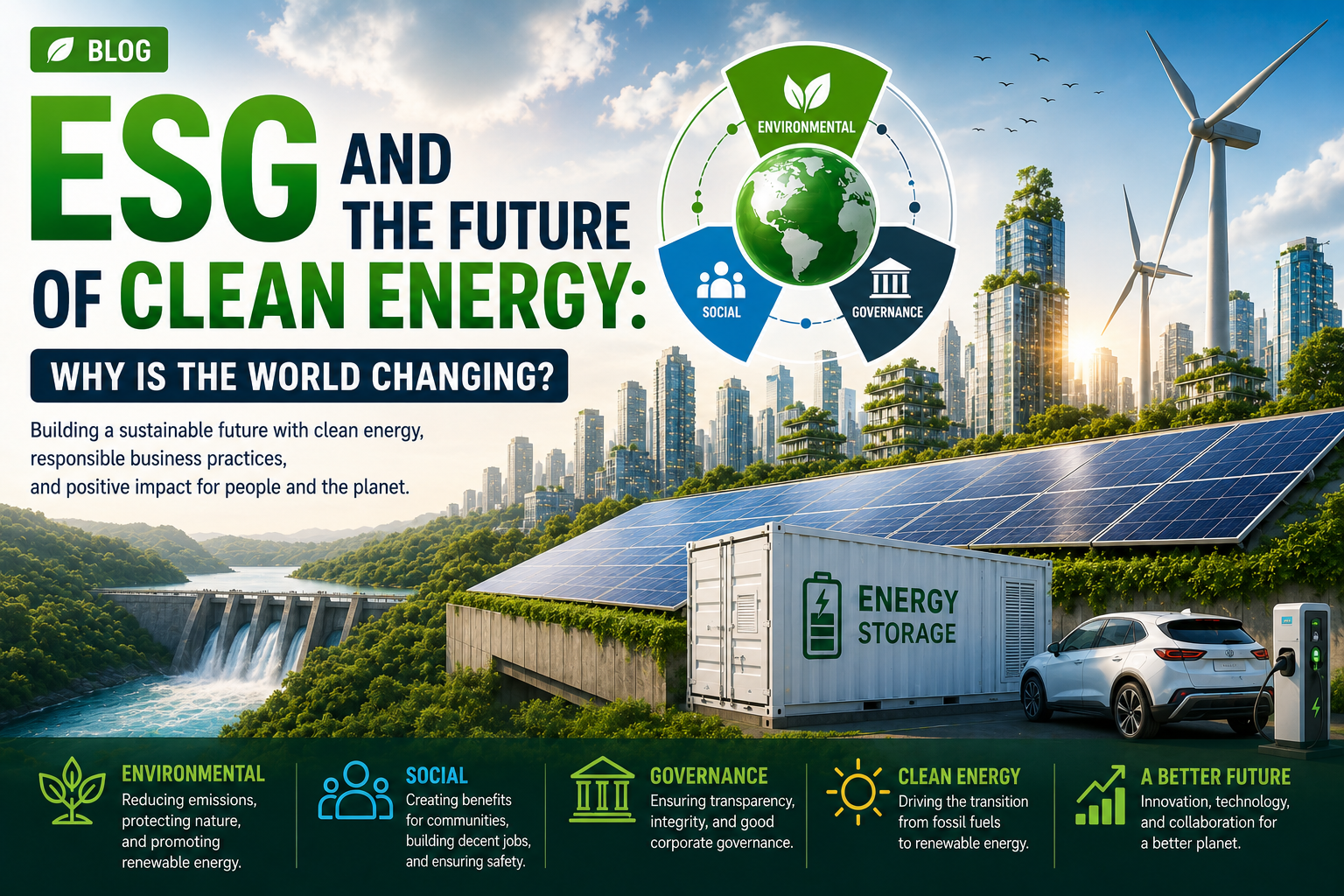
E – Environmental
S – Social
G – Governance
These three aspects are used to evaluate whether a company operates its business responsibly or not.
Let’s look at each one with simple examples.
1. Environmental (E)
This aspect looks at how a company treats the environment.
Examples:
• Does the company produce high pollution?
• Does it use clean energy?
• Does it manage waste properly?
• Does it reduce carbon emissions?
In the energy industry, these questions are very important.
Example:
Coal-fired power plants produce large amounts of electricity but also generate significant carbon emissions. Meanwhile, solar power plants generate electricity without carbon emissions during operation.
This is where ESG begins to influence investment decisions.
Global investors are now asking:
“Is this company environmentally responsible?”
If not, they may reduce their investment.
2. Social (S)
The social aspect looks at how a company interacts with people.
This includes:
• Worker safety
• Relationship with surrounding communities
• Employee rights
• Social impacts of company projects
For example, in an energy project:
When a company builds a power plant, it must consider:
• Do local communities receive benefits?
• Are new job opportunities created?
• Is the community’s environment affected?
Companies that apply ESG principles try to ensure their projects provide positive impacts for society.
3. Governance (G)
Governance relates to how a company is managed.
It includes:
• Financial transparency
• Management integrity
• Corporate supervision systems
• Anti-corruption practices
Investors want to ensure that companies they support have strong governance.
Without good governance, even a “green” company can still carry significant risks.
Why Has ESG Become a Global Trend?
If we look back 20–30 years ago, companies were usually judged by only one thing:
profit.
But this perspective has started to change.
Many investors, governments, and communities realize that businesses cannot continue growing by damaging the planet.
There are several main reasons why ESG has become a major global trend.
1. Climate Change
The world is facing a major challenge: climate change.
One of the biggest causes is carbon emissions from burning fossil fuels such as:
• Coal
• Oil
• Gas
The energy sector contributes a significant portion of global carbon emissions.
Because of this, many countries are creating policies to reduce emissions.
This is where ESG becomes a tool to encourage change.
2. Pressure from Investors
Global investors are increasingly concerned about environmental risks.
If a company has high carbon emissions, investors worry that the company may face:
• Stricter environmental regulations
• Carbon taxes
• Poor reputation
As a result, many investors are moving their funds toward companies with better ESG performance.
3. Consumers Are Becoming More Aware
Consumers are also paying more attention to the environmental impact of the products they use.
Examples:
• Electric vehicles
• Renewable energy
• Environmentally friendly products
Companies that fail to adapt may lose market opportunities.
The Relationship Between ESG and Clean Energy
Now we enter the most interesting part: the relationship between ESG and clean energy.
Clean energy refers to energy sources that produce very low or zero carbon emissions.
Examples:
• Solar power
• Wind power
• Hydropower
• Biomass
• Geothermal energy
Clean energy is one of the main pathways to achieve ESG goals.
Let’s see how they are connected.
1. ESG Encourages Renewable Energy Investment
Many global investment funds now apply ESG requirements.
This means they only finance projects that meet certain environmental standards.
As a result:
• Solar projects are increasing
• Wind projects are increasing
• Energy storage projects are increasing
Trillions of dollars are now flowing into the clean energy sector.
2. Energy Companies Are Starting to Transform
Many large energy companies are changing their strategies.
In the past, they focused mainly on oil and gas.
Today, they are also investing in:
• Solar energy
• Hydrogen
• Offshore wind energy
• Energy storage batteries
This transformation is often called:
energy transition
3. Clean Energy Technology Is Becoming Cheaper
One reason clean energy is growing rapidly is because costs are decreasing.
The clearest example is solar panels.
Solar panel prices have dropped significantly over the last two decades.
This makes clean energy increasingly competitive compared with fossil fuels.
Examples of ESG Implementation in the Energy Sector
To better understand ESG, let’s look at some real examples.
1. Solar Power Plant (PLTS)
Solar power is one of the most popular examples of clean energy.
Solar panels convert sunlight into electricity without carbon emissions during operation.
Advantages of solar power:
• Environmentally friendly
• Can be installed in many locations
• Low operating costs
However, ESG considerations are still needed, such as:
• Land usage
• Solar panel recycling
• Social impacts of projects
2. Battery Energy Storage System (BESS)
Renewable energy sources such as solar and wind are not always available.
The sun only shines during the day.
The wind does not always blow.
Therefore, energy storage technology such as batteries is needed.
A Battery Energy Storage System (BESS) allows electricity to be stored when production is high and used when needed.
This helps create a more stable energy system.
3. Data Centers and Green Energy
Data centers are the “digital brains” of the modern world.
Almost all internet services such as:
• Cloud services
• Streaming platforms
• Social media
depend on data centers.
However, data centers consume enormous amounts of electricity.
That is why many technology companies are starting to use renewable energy to operate their data centers.
This is also part of their ESG strategy.
Challenges of ESG in Energy Transition
Although ESG looks very positive, implementation is not always easy.
There are several challenges.
1. Initial Investment Costs
Many clean energy technologies require large upfront investments.
Examples:
• Large-scale solar projects
• New electricity networks
• Energy storage systems
However, long-term operating costs are usually lower.
2. Energy Infrastructure
The current global energy system is still dominated by fossil fuels.
Changing this system requires:
• New infrastructure
• New technology
• Government policies
This process takes time.
3. Balancing Energy and Economic Needs
Some countries still depend heavily on fossil fuels for their economies.
For example, countries that export coal or oil.
Energy transition must be managed carefully so it does not harm economic stability.
ESG Opportunities in Indonesia
Indonesia has great potential for implementing ESG in the energy sector.
Several supporting factors include:
1. Large Renewable Energy Potential
Indonesia has huge renewable energy potential, including:
• Solar energy
• Geothermal energy
• Hydropower
• Biomass
This potential can become a major clean energy source in the future.
2. Growth of Green Industry
Many industries are beginning to move toward cleaner energy.
Examples:
• Clean energy-based smelters
• Green industrial areas
• Renewable-powered data centers
This creates new investment opportunities.
3. New Career Opportunities
Energy transition is also creating many new jobs.
Growing fields include:
• Energy analyst
• Renewable energy engineer
• ESG specialist
• Carbon analyst
For younger generations, this represents an exciting career opportunity.
The Future of Energy: Toward a Cleaner System
Looking at global trends, the future energy system will likely look very different from today.
Future energy systems will likely have:
• More renewable energy
• More energy storage systems
• Smarter electricity grids
• Greater digital technology integration
ESG will become one of the main drivers of this transformation.
Companies that fail to adapt may fall behind.
Meanwhile, companies that innovate will become leaders in the new energy era.
Conclusion
ESG is not just a popular business term. It is a new way of understanding how the economy, environment, and society are connected.
In the energy sector, ESG plays a critical role because energy is one of the largest sources of global carbon emissions.
Through ESG implementation, energy companies are transitioning toward cleaner sources such as solar, wind, and energy storage.
The journey toward a cleaner energy system is not easy. There are challenges in cost, technology, and infrastructure.
However, the direction of change is clear.
The world is moving toward a more sustainable energy future.
For Indonesia, this is a major opportunity to utilize its abundant renewable energy resources and build a cleaner energy system.
And for the younger generation, understanding ESG and clean energy can become the first step toward contributing to a better energy future.