Biochar & Carbon Capture: Green Technology from Biomass
Why Is Biochar Becoming a Hot Topic?
In recent years, the world has become increasingly focused on addressing climate change. One of the biggest challenges is how to reduce the accumulation of carbon dioxide (CO₂) in the atmosphere. The solution is not only about cutting emissions from industry and transportation but also about removing carbon that has already been released into the air.
This is where biochar comes into the picture. Biochar is more than just a by-product of agricultural waste—it is part of the carbon removal solution. The technology combines science, energy, agriculture, and climate strategy into a single approach.
What Is Biochar?
Simply put, biochar is a carbon-rich material produced from biomass through a process called pyrolysis—the heating of biomass at high temperatures (300–700°C) in an environment with little or no oxygen.
🔹 Common Feedstocks
• Rice husks
• Palm oil waste (shells and empty fruit bunches)
• Corn cobs
• Waste wood
• Municipal organic waste
🔹 Main Products
• Solid biochar (long-term carbon storage)
• Syngas and bio-oil (which can be used as renewable energy sources)
In other words, a single pyrolysis process can produce both biochar and renewable energy.
Biochar as a Carbon Capture Technology
When people hear the term carbon capture, they often think of large systems installed on factory smokestacks or power plants that capture CO₂ before it enters the atmosphere.
Biochar works differently.
Carbon Sequestration Through Biomass
If biomass waste is left to decompose naturally, it releases carbon dioxide (CO₂) and methane (CH₄) into the atmosphere.
Through pyrolysis, much of that carbon is converted into a stable solid form and locked inside biochar.
Long-Term Carbon Storage
Biochar has a highly porous and stable structure that allows carbon to remain stored in soils for hundreds—or even thousands—of years.
Multiple Benefits
In addition to storing carbon, biochar can improve soil quality and agricultural productivity.
This is why biochar is often classified as a Negative Emissions Technology (NET)—a technology that not only reduces new emissions but also removes carbon that is already present in the atmosphere.
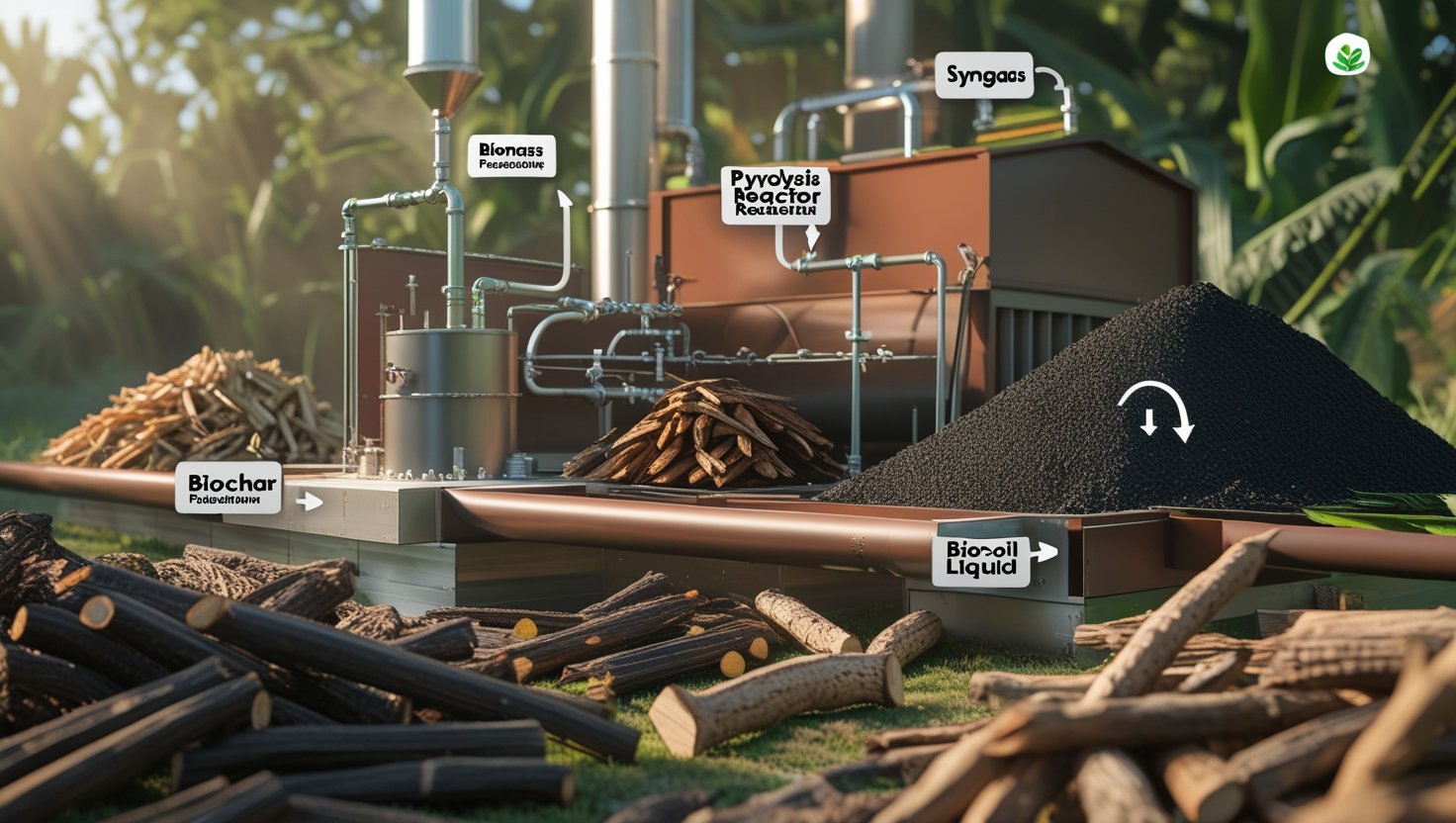
How a Modern Biochar Facility Operates
A modern biochar facility can be thought of as a combination of a small renewable energy plant and an organic soil amendment factory.
1. Biomass Collection
Agricultural residues or organic waste are collected, dried, and sorted before processing.
2. Pyrolysis Process
The biomass is fed into a pyrolysis reactor operating at temperatures between 400–600°C in an oxygen-limited environment.
Outputs include:
• Solid biochar
• Syngas
• Bio-oil
3. Energy Recovery
The syngas can be used as a fuel source to generate heat or electricity.
4. Carbon Capture Integration
CO₂ produced during the process can be captured using Carbon Capture and Storage (CCS) technologies and either stored underground or utilized in industrial applications (CCU).
5. Storage and Application
Biochar is stored in silos before being applied to agricultural land, mine reclamation projects, or marketed as part of carbon credit programs.
Benefits of Biochar: From Climate to Agriculture
🌍 Environmental Benefits
• Reduces carbon emissions and supports Indonesia’s Net Zero 2060 targets.
• Helps prevent air pollution caused by open burning of agricultural waste.
• Promotes sustainable waste management.
🌾 Agricultural Benefits
• Improves soil water retention through its porous structure.
• Provides a favorable habitat for beneficial microorganisms.
• Enhances soil fertility and productivity.
• Reduces dependence on chemical fertilizers.
💰 Economic Benefits
• Creates opportunities for exporting carbon removal credits to international markets.
• Generates new employment opportunities in rural areas.
• Supports a circular economy by turning waste into valuable products.
Challenges in Biochar Development
Despite its potential, biochar faces several challenges.
Production Scale
Modern pyrolysis facilities remain relatively limited in number and capacity.
High Capital Costs
Advanced pyrolysis technologies require significant upfront investment.
Standards and Certification
Biochar quality must be standardized and certified to qualify for international carbon markets.
Awareness and Education
Many farmers still view biochar as ordinary charcoal rather than a soil improvement and carbon sequestration tool.
Biochar and Carbon Markets
One of the most attractive aspects of biochar is its potential role in the carbon market.
Each ton of biochar can store significant amounts of carbon for extended periods.
When verified under recognized standards such as Verra or the Gold Standard, biochar projects can generate carbon removal credits.
Companies and countries seeking to offset their emissions can purchase these credits.
For Indonesia, this presents a major opportunity:
Abundant biomass → Biochar production → Carbon credits → Additional income for farmers and green industries.
The Future of Biochar in Indonesia
With vast biomass resources from palm oil, sugarcane, forestry residues, and municipal organic waste, Indonesia has the potential to become a global leader in biochar production.
Several strategic pathways could accelerate development:
• Strengthening collaboration between the energy and agricultural sectors.
• Developing small- and medium-scale pyrolysis technologies suitable for rural communities and SMEs.
• Integrating biochar into Indonesia’s Net Zero roadmap.
• Expanding access to global carbon markets through mechanisms such as Article 6 of the Paris Agreement.
Final Thoughts
Biochar is a powerful example of how a relatively simple technology can deliver multiple benefits.
It can:
• Remove carbon from the atmosphere
• Improve soil productivity
• Create new economic opportunities
If developed at scale, biochar could become one of Indonesia’s strongest assets in the transition toward a green economy.
Turning waste into climate solutions.
Transforming charcoal into a pathway for a more sustainable future.