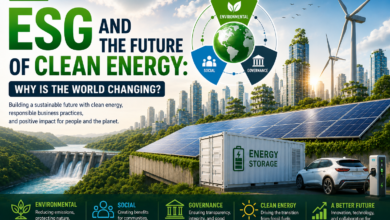
Recently, two terms have become increasingly common in the business and energy sectors: ESG and CSR.
Many people assume these two concepts are the same. In fact, in some companies, CSR programs are often considered sufficient to demonstrate that the company cares about the environment and society.
However, ESG and CSR are actually two different concepts, even though both focus on corporate responsibility toward the environment and society.
Understanding the difference between ESG and CSR is becoming increasingly important, especially during the energy transition, as the world shifts toward cleaner and more sustainable energy systems.
In this article, we’ll explore:
• What CSR is
• What ESG is
• Why ESG is becoming increasingly important
• The key differences between ESG and CSR
• Examples of ESG and CSR in the energy sector
• How ESG will shape the future of businesses
Let’s begin with the concept that has been around longer: CSR.
What Is CSR?
CSR stands for Corporate Social Responsibility.
Simply put, CSR is a company’s responsibility toward the surrounding community and the environment.
A company is expected not only to generate profits but also to create positive contributions to society.
CSR is commonly implemented through various social initiatives, such as:
• educational support programs
• building public facilities
• disaster relief assistance
• community training programs
• environmental activities such as tree planting
Many large companies around the world have CSR programs.
In Indonesia, CSR has also become a common practice, particularly among companies operating in the energy, mining, and industrial sectors.
Why Is CSR Important?
Companies do not operate in isolation. They operate within communities and utilize natural resources.
Therefore, companies also have a responsibility to create positive impacts for the communities around them.
CSR helps companies in several ways.
1. Building Relationships with the Community
When a company builds a factory or a power plant in a particular area, the surrounding community is inevitably affected.
CSR helps establish positive relationships between the company and local communities.
For example:
• providing scholarships for students living near the project
• improving school facilities
• offering vocational training
These initiatives help local communities feel that the company genuinely cares about their well-being.
2. Enhancing Corporate Reputation
Companies that actively participate in social initiatives generally enjoy a stronger public image.
Examples include companies that:
• provide disaster relief
• support education
• protect the environment
A positive reputation also increases public trust in the company.
3. Supporting Sustainable Development
Some CSR programs also contribute directly to environmental protection.
Examples include:
• tree planting programs
• waste management initiatives
• water conservation projects
These programs help balance economic growth with environmental sustainability.
What Is ESG?
Now let’s move to the newer concept: ESG.
ESG stands for: Environmental , Social , Governance
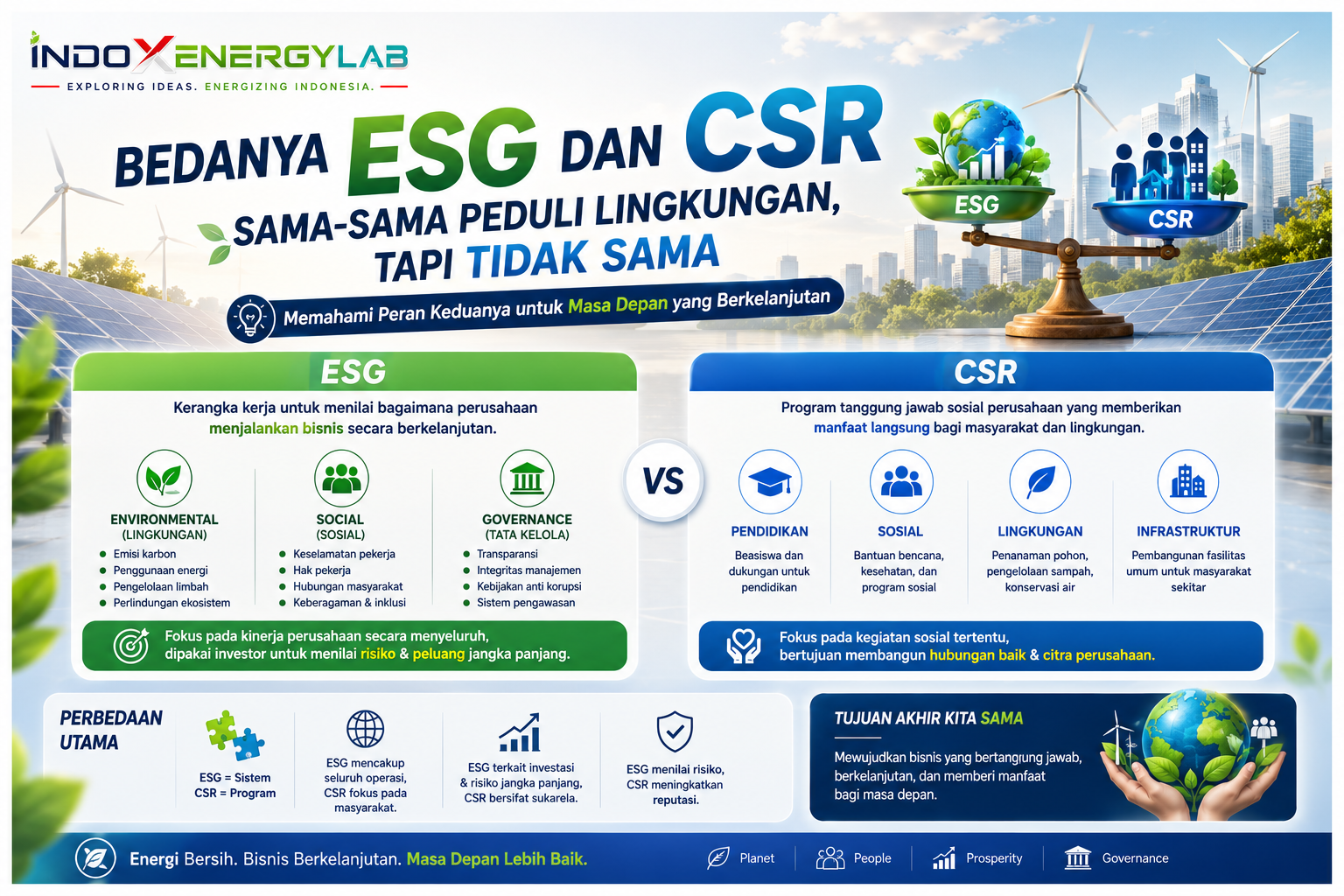
ESG is a framework used to evaluate how responsibly a company operates its business.
Unlike CSR, which typically consists of social programs, ESG focuses on how the company manages its entire business operation.
Let’s examine each component.
1. Environmental
This pillar evaluates a company’s environmental impact.
Key areas include:
• carbon emissions
• energy consumption
• waste management
• water usage
• ecosystem protection
This aspect is particularly important in the energy sector.
For example:
A coal-fired power plant produces significant carbon emissions, while a solar power plant generates almost no emissions during operation.
As a result, many energy companies are investing in cleaner technologies.
2. Social
The Social aspect focuses on how a company treats people.
This includes:
• worker safety
• employee rights
• community relations
• diversity and inclusion
Companies with strong social performance generally earn greater trust from employees, communities, and investors.
3. Governance
Governance focuses on how a company is managed.
This includes:
• financial reporting transparency
• management integrity
• anti-corruption policies
• corporate oversight systems
Companies with strong governance generally face lower business risks.
Why Is ESG Becoming More Important?
Over the past few years, ESG has become one of the hottest topics in business and investment.
There are several key reasons.
1. Climate Change
Climate change has become one of the world’s greatest challenges.
Carbon emissions generated by human activities—especially within the energy sector—are among the primary contributors.
As a result, many countries and companies have committed to reducing carbon emissions.
ESG provides a framework for measuring how much companies contribute to these goals.
2. Investors Care More Than Ever
Today’s global investors evaluate more than financial performance.
They also consider a company’s environmental and social impact.
Companies with strong ESG performance are generally more attractive to investors.
3. Government Regulations
Many countries have introduced regulations requiring companies to disclose their ESG performance.
As a result, ESG has become increasingly important across the business world.
Key Differences Between ESG and CSR
Now let’s answer the main question:
What exactly is the difference between ESG and CSR?
Although both focus on corporate responsibility, there are several fundamental differences.
1. CSR Is a Program; ESG Is a Business Framework
CSR usually consists of specific initiatives.
For example:
• educational assistance
• community outreach
• charitable donations
ESG, on the other hand, evaluates the company’s entire business operation.
It examines how the company:
• produces energy
• manages waste
• treats employees
• governs the organization
In other words, ESG is much broader than CSR.
2. CSR Focuses on Communities; ESG Focuses on Business Operations
CSR primarily focuses on programs that benefit society.
ESG evaluates how a company’s core business activities impact both society and the environment.
For example:
If an energy company provides scholarships to nearby communities, that is CSR.
However, if the same company reduces carbon emissions from its power generation process, that is ESG.
3. CSR Is Voluntary; ESG Influences Investment Decisions
CSR programs are generally voluntary.
Companies implement CSR because they want to contribute positively to society.
ESG, however, is widely used by investors to assess corporate risk.
Investors evaluate whether a company:
• is environmentally responsible
• has strong corporate governance
• values employee well-being
These factors influence investment decisions.
4. CSR Focuses on Reputation; ESG Focuses on Risk
CSR is often intended to strengthen a company’s public image.
ESG is designed to evaluate long-term business risks.
For example:
A company with high carbon emissions may face future carbon taxes or stricter environmental regulations.
Investors want to understand these risks before investing.
Examples of CSR and ESG in the Energy Sector
To better understand the differences, let’s look at some examples.
CSR Example
A power generation company carries out the following activities:
• providing scholarships for local students
• building clean water facilities
• assisting disaster victims
• planting trees around its operational area
These are all CSR initiatives.
They provide direct benefits to local communities.
ESG Example
Now imagine the same company makes the following changes:
• replacing part of its coal-fired generation with renewable energy
• reducing carbon emissions
• improving worker safety standards
• increasing financial reporting transparency
These initiatives fall under ESG because they directly relate to how the company operates its business.
Will CSR Disappear Because of ESG?
The answer is no.
CSR remains important.
In many companies, CSR and ESG work together.
CSR continues to play an important role in strengthening relationships with local communities.
Meanwhile, ESG provides a broader framework to ensure that companies operate sustainably.
In other words:
CSR is one part of corporate responsibility.
ESG is the bigger picture of responsible business operations.
The Future of Business in the ESG Era
Looking ahead, ESG will likely become even more important.
Several trends are already emerging:
• energy companies are transitioning toward renewable energy
• investments in low-carbon technologies are increasing
• corporate transparency is becoming more important
• investors increasingly consider ESG performance
Companies that ignore ESG may face several risks:
• difficulty attracting investment
• loss of public trust
• stricter regulatory requirements
On the other hand, companies with strong ESG performance can enjoy significant competitive advantages.
ESG Opportunities for the Younger Generation
For younger generations, understanding ESG also creates exciting career opportunities.
New professions are rapidly emerging, including:
• ESG Analyst
• Sustainability Specialist
• Carbon Analyst
• Renewable Energy Engineer
• Energy Data Analyst
These careers will become increasingly important in the future economy.
Conclusion
CSR and ESG are often viewed as the same, but they serve different purposes.
CSR primarily focuses on social programs designed to support communities.
ESG, on the other hand, is a broader framework for evaluating how responsibly a company manages its environmental impact, social responsibility, and corporate governance.
CSR usually takes the form of programs such as educational support or community initiatives.
ESG covers a much wider range of operational practices, including carbon emission reduction, worker safety, and management transparency.
In today’s era of energy transition and climate change, ESG has become increasingly important because it helps businesses move toward a more sustainable economic model.
For Indonesia, adopting ESG also presents tremendous opportunities to build a cleaner and more sustainable energy sector.
Understanding the difference between ESG and CSR is important not only for companies, but also for society and the younger generation who will shape the future economy.