What Is Carbon Emission?
If you have ever heard the term “carbon emission”, you probably immediately think of:
• Vehicle exhaust 🚗
• Factory chimneys 🏭
• Or climate change issues 🌡️
But what exactly is carbon emission? Is it always harmful? And why has it become such an important global topic?
In this article, we will discuss carbon emissions from the very basics to their connection with energy and everyday life—with a simple but meaningful explanation. Suitable for everyone, from elementary school students to university students 😉
1. What Is Carbon Emission?
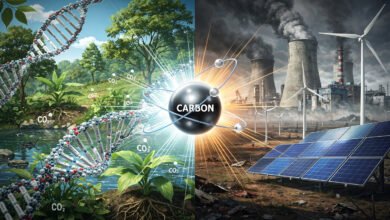
Simply explained, carbon emission is the release of carbon-containing gases into the atmosphere (air).
These gases are usually:
• Carbon dioxide (CO₂)
• Methane (CH₄)
In Chemistry, both of these gases are classified as carbon compounds.
So, in simple terms:
👉 Carbon emission = carbon that is “released” into the air
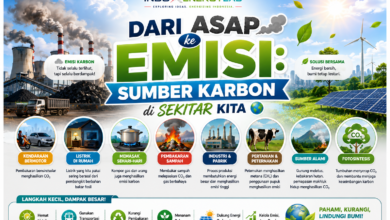
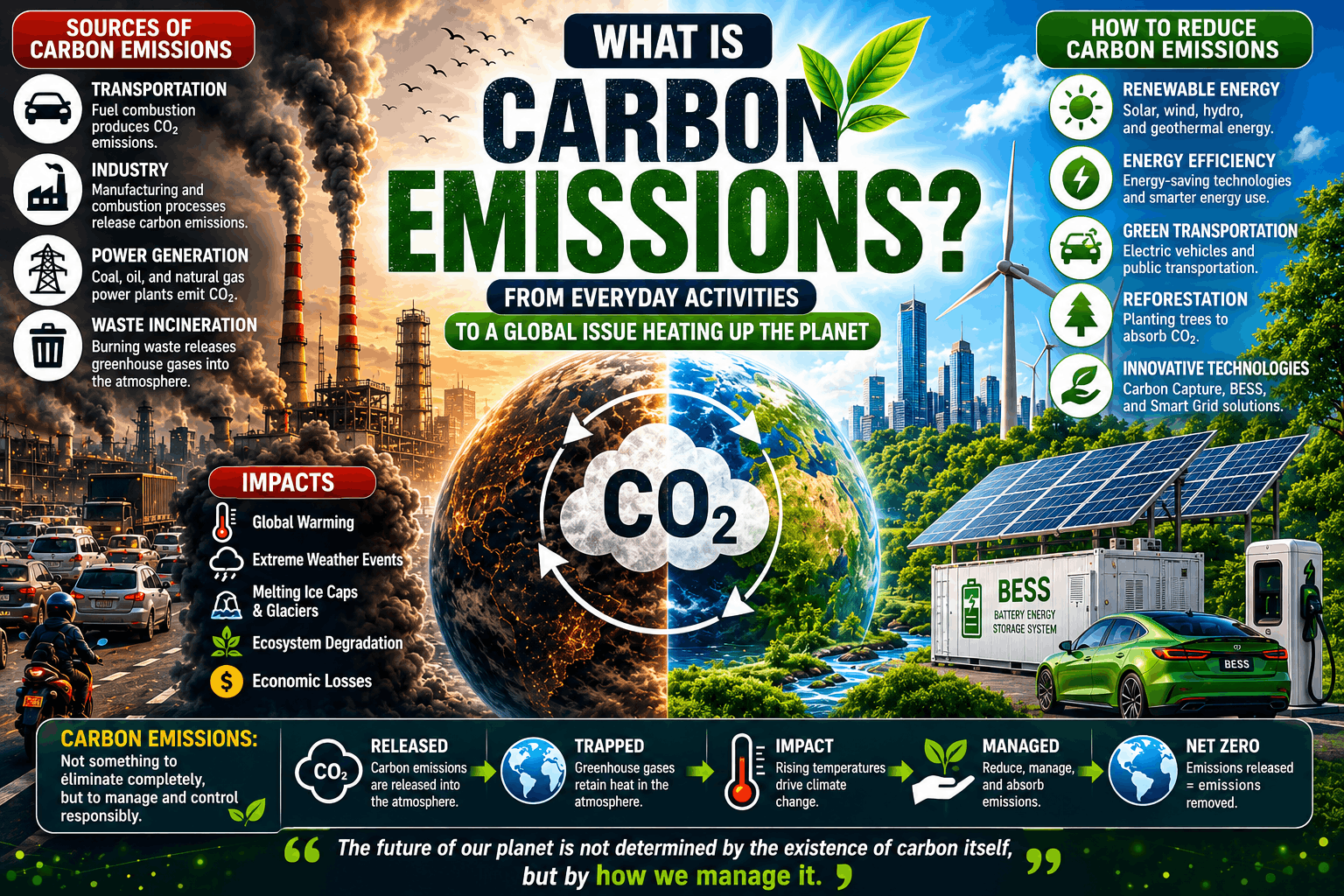
2. Where Do Carbon Emissions Come From?
Carbon emissions can come from many sources. Without realizing it, humans also contribute to emissions.
a. Human Activities
This is the largest contributor:
• Motor vehicles
• Power plants
• Industries
• Waste burning
Real example:
When gasoline is burned in a motorcycle → it produces CO₂.
b. Natural Activities
Carbon emissions also occur naturally:
• Volcanic eruptions 🌋
• Natural forest fires 🔥
• Respiration of living organisms
In Biology, humans and animals also produce CO₂ when breathing.
3. Why Do Carbon Emissions Happen?
The main key is:
Carbon combustion.
Examples:
• Gasoline burned → energy + CO₂
• Coal burned → electricity + CO₂
So every time we need energy from fuel, carbon emissions are usually produced.
4. Types of Carbon Emissions
Carbon emissions are not only one type. The most common ones are:
a. Carbon Dioxide (CO₂)
• The most widely produced
• Mainly comes from fuel combustion
b. Methane (CH₄)
• Comes from livestock activities
• Comes from waste management
c. Other Greenhouse Gases
All of these gases contribute to global warming.
5. Carbon Emissions and the Greenhouse Effect 🌡️
Carbon emissions are directly related to the Greenhouse Effect.
How it works:
1. The sun heats the Earth
2. Heat is reflected back
3. Gases such as CO₂ trap some of that heat
The result:
👉 Earth stays warm (which is actually necessary)
But if it becomes excessive:
👉 Earth becomes too hot
6. Carbon Emissions and Global Warming
When carbon emissions increase:
• Earth’s temperature rises
• Polar ice melts
• Weather becomes more extreme
This is called global warming.
The impacts are felt worldwide, including Indonesia:
• Floods
• Droughts
• Changing seasons
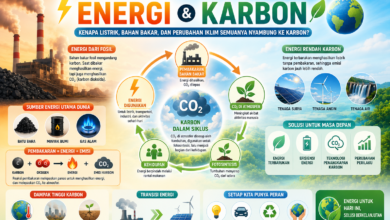
7. Carbon Emissions in the Energy Sector ⚡
The energy sector is one of the largest contributors to emissions.
Examples:
• Coal power plants (PLTU)
• Gas power plants (PLTG)
• Oil-based vehicles
In a Coal-Fired Power Plant (PLTU):
• Coal is burned
• Electricity is produced
• But large amounts of CO₂ are also released
That is why the energy sector has become a major focus in emission reduction efforts.
8. Carbon Emissions in Everyday Life
Without realizing it, we create carbon emissions every day.
Examples:
• Riding a motorcycle
• Using electricity
• Cooking with gas
• Online shopping (logistics)
All of these activities create something called:
👉 Carbon footprint
9. Are Carbon Emissions Always Bad?
The answer:
Not always.
Carbon emissions are:
• Natural
• Part of Earth’s carbon cycle
Examples:
• Human breathing
• Photosynthesis in plants
The problem is not the emission itself, but:
👉 when the amount becomes excessive
10. Why Are Carbon Emissions Increasing?
Several main reasons:
a. Industrialization
Since the Industrial Revolution:
• Machines have been used on a massive scale
• Fossil fuel consumption has increased
b. Population Growth
• Higher energy demand
• Increased transportation needs
c. Modern Lifestyle
• Higher consumption
• Higher energy usage
11. Impacts of Carbon Emissions 🌍
If carbon emissions are not controlled:
a. Environment
• Global warming
• Climate change
• Ecosystem damage
b. Economy
• Losses caused by disasters
• Increasing energy costs
c. Social Impact
• Water shortages
• Food security problems
12. How to Reduce Carbon Emissions
The good news is, we can reduce carbon emissions.
a. Renewable Energy
• Solar power
• Wind energy
• Hydropower
b. Energy Efficiency
• Energy-saving lighting
• Efficient technologies
c. Environmentally Friendly Transportation
• Electric vehicles
• Public transportation
d. Reforestation
• Planting trees
• Absorbing CO₂
13. Technologies to Reduce Emissions
Technology also plays a major role.
a. Carbon Capture
Capturing CO₂ before it enters the atmosphere.
b. Smart Grid
Optimizing energy usage and distribution.
c. BESS (Battery Energy Storage System)
Storing energy from clean energy sources.
14. Carbon Emissions and Industry
Today, companies are becoming more serious about managing carbon emissions.
Several concepts are emerging:
• ESG (Environmental, Social, Governance)
• Carbon trading
• Carbon tax
Carbon emissions are no longer only an environmental issue, but also:
👉 a business and strategic issue
15. Net Zero Emission
The current global target is:
👉 Net Zero Emission
Meaning:
• Carbon released = carbon absorbed
How to achieve it:
• Reduce emissions
• Capture carbon
• Use technology
16. Our Role as Individuals
Even though individual actions may seem small, we still have an important role.
Simple examples:
• Save electricity
• Reduce private vehicle usage
• Use energy wisely
Small actions by many people → create a big impact.
17. Simple Analogy
Carbon emissions are like kitchen smoke:
• A small amount → normal
• Too much → causes breathing problems
So the key is:
👉 not eliminating carbon completely, but controlling it
18. Summary
Carbon emissions are:
• The release of carbon gases into the atmosphere
• A natural part of Earth’s system
• But can become harmful when excessive
Sources include:
• Energy
• Transportation
• Human activities
Impacts include:
• Climate change
• Global warming
19. Closing
arbon emissions are part of modern life.
We cannot completely avoid them, but we can:
👉 reduce them
👉 manage them
👉 use them wisely
Because the future of Earth is not determined by whether carbon exists or not…
but by how we manage and treat it.