1. Have You Ever Heard the Term “ESG”?
Have you ever been scrolling through the news and suddenly found the term “ESG” — saying that companies around the world now need to implement ESG to be considered modern and responsible?
When people first hear it, many think ESG sounds like the name of a foreign company or some complicated business term.
But actually, ESG is a set of three important letters that can change the direction of the business world — and even the future of our planet.
ESG stands for:
Environmental, Social, and Governance.
Simply put, ESG is a way for companies to show that they are not only focused on making profits, but also care about the environment, people, and responsible management.
If we compare it to human character:
• “E” = caring about nature
• “S” = caring about people
• “G” = being trustworthy and responsible
2. Why Is the World Suddenly Talking About ESG?
Before ESG became popular, the world had already realized that the way businesses operate often makes the planet “struggle.”
Imagine factories dumping waste carelessly, forests being cleared, rivers becoming polluted, and the air filled with emissions — all in the name of production and profit.
The result?
The climate gets hotter, extreme weather becomes more common, and many ecosystems are damaged.
At the same time, society started demanding companies to become more responsible.
Investors also became more concerned because they did not want to invest in businesses that could create problems in the future.
That is why ESG emerged as a balanced solution — allowing businesses to continue growing while protecting people and the planet.
3. Let’s Break It Down: What Is Environmental (E)?
The first letter, E, stands for Environmental, which focuses on environmental issues.
Simply, a company with a strong “E” performance tries to protect the environment.
Examples include:
• Reducing carbon emissions and air pollution
• Saving energy and water
• Managing waste properly
• Using environmentally friendly materials
• Supporting tree planting and reforestation
In real life:
A mining company may restore damaged mining areas.
An energy company may invest in renewable energy.
A factory may recycle wastewater.
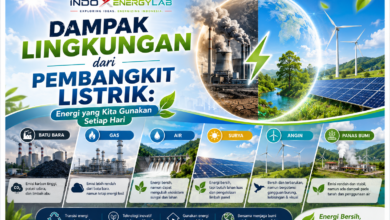
One real example: PLN (Indonesia’s state electricity company) is implementing a co-firing program, which mixes coal with biomass (such as wood pellets or agricultural waste) to reduce environmental impact.
This is one example of action in the “E” aspect.
4. Next Is “S”: Social
The second letter, S, means Social — focusing on how companies interact with people and communities.
Imagine you own a factory in a village.
Besides production, you also need to think:
“How does this factory affect the local community?”
“Do people benefit from it, or are they negatively impacted?”
The Social aspect includes:
• Worker safety and welfare
• Gender equality and equal opportunities
• Relationships with local communities
• Human rights protection
• Corporate social responsibility programs (CSR)
Example:
A mining company that builds schools, small hospitals, or provides job training for local residents is practicing the “S” aspect.
In modern workplaces, providing a safe environment, fair working hours, and equal career opportunities for all genders are also part of Social Responsibility.
5. Finally, “G” Means Governance
This part is often forgotten, but it is extremely important.
G means Governance — responsible corporate management.
Think of it like a school system:
Who makes decisions?
How are decisions controlled?
How do we make sure nobody cheats?
Governance includes:
• Financial transparency
• Integrity and anti-corruption practices
• Clear organizational structure
• Business ethics
• Protection of shareholders and employees
A company with good Governance means it has honest management, transparent financial reports, and responsible decision-making.
For example, companies that regularly publish Sustainability Reports and openly share environmental and social information are practicing good Governance.
6. ESG Is Not Just a Trend
You might ask:
“Why is every company talking about ESG now?”
The answer is simple:
Because the world is changing.
Investors, consumers, and governments are no longer judging companies only by:
“How much profit do they make?”
They also ask:
“How big is their impact on the environment and society?”
Imagine two companies:
Both make big profits.
Company A pollutes rivers and treats workers poorly.
Company B protects the environment and cares about employees.
If you were an investor, which one would you choose?
Probably Company B, right?
That is the basic idea behind ESG.
ESG helps companies become more ethical, sustainable, and trusted by society.
In the long term:
Good reputation = investor confidence = stable business growth.
7. A Short History: Where Did ESG Come From?
ESG is not a completely new concept.
The idea started developing around the 1960s when the world became more aware of environmental damage.
However, the term “ESG” became widely known after the report “Who Cares Wins” was published by the UN Global Compact in 2004.
The report encouraged businesses and financial institutions to consider three pillars:
• Environment
• Social responsibility
• Good governance
The message was simple:
Companies that care about people and the planet can actually become stronger economically.
Since then, ESG has become a new global standard for responsible business.
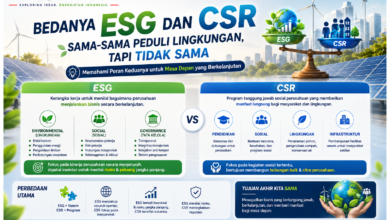
8. ESG vs CSR: Are They the Same?
Many people think ESG and CSR (Corporate Social Responsibility) are the same.
Actually, they are different.
CSR is usually about additional social activities, such as:
• Charity programs
• Community donations
• Tree planting events
ESG is much broader and more systematic.
CSR is like a “good action.”
ESG is the “DNA of responsibility” inside the entire company.
Example:
CSR:
A company plants trees once a year.
ESG:
A company redesigns its operations to continuously reduce energy use and environmental impact.
So ESG is not just about giving help — it is a new way of building sustainable businesses.
9. ESG in the Real World: Who Is Already Doing It?
Many global companies have started applying ESG principles.
🌍 Global examples:
• Tesla — focuses on clean energy and electric vehicles.
• Unilever — works toward zero waste and sustainable products.
• Microsoft — has a goal to become carbon negative by 2030.
🇮🇩 Indonesia examples:
• Pertamina — investing in green energy and biofuel.
• PLN — supporting energy transition through co-firing and solar power.
• Astra International — developing community programs and improving energy efficiency.
They understand that the future of business is not only about being the fastest, but about being the most sustainable.
10. ESG and Green Investment
Today, many global investors apply the principle of Responsible Investment.
This means they prefer investing in companies with strong ESG performance.
Large financial institutions such as BlackRock, the World Bank, and the Asian Development Bank (ADB) consider ESG as an important factor in financing decisions.
This means companies that want funding must prove:
🌱 “We operate our business while considering environmental, social, and governance responsibilities.”
This creates the idea of Green Financing.
Examples:
• Solar power projects
• Waste management projects
• Industrial decarbonization programs
11. ESG in Indonesia: Growing Rapidly
Indonesia is also becoming more serious about ESG.
The Financial Services Authority (OJK) encourages publicly listed companies to publish Sustainability Reports every year.
The Indonesia Stock Exchange (IDX) also created an index called IDX ESG Leaders, which includes companies with strong ESG performance.
The government also connects ESG with:
• Net Zero Emission 2060 targets
• Green economy development
So ESG is not only a global corporate issue — it has become part of Indonesia’s development strategy.
12. Challenges in Implementing ESG
Of course, implementing ESG is not always easy.
Some real challenges include:
• Limited understanding of ESG
• Some companies still see ESG as a cost, not an investment
• ESG measurement standards are not always the same
• Lack of sustainability professionals
However, awareness is growing.
Many universities, communities, and startups in Indonesia are now focusing on:
• ESG
• Sustainability
• Green innovation
13. Real Benefits of ESG for Companies
Many people are surprised that ESG is not only about having a good image.
It can also create real business benefits.
Benefits include:
• Lower operating costs through energy efficiency
• Higher competitiveness with investors and consumers
• Lower legal and reputation risks
• Better employee satisfaction
• More opportunities in global markets
So ESG is not an extra burden.
It is a strategy for long-term survival.
14. Simple Analogy: ESG Is Like Healthy Food
Imagine this:
CSR is like a delicious side dish — nice to have, but not always available.
ESG is like healthy rice that you need every day.
At first, it may feel difficult and expensive.
But in the long run, it makes your body (and your business) stronger.
A business without ESG may grow quickly but can collapse easily.
A business with ESG may grow slower, but it has stronger roots and lasts longer.
15. The Future: ESG Will Become the “ID Card” of Business
Believe it or not, in the next 10 years, companies may be evaluated through ESG scores just like people have identity numbers.
Investors, governments, and society will look at:
• How much carbon they emit
• How well they treat employees
• How transparent their finances are
And this will not only apply to large companies.
Even small businesses working with big corporations may be asked:
“Do you have environmental and social policies?”
ESG is not just a trend.
It is becoming a necessity.
16. What Can We Do?
As individuals, we can also support ESG.
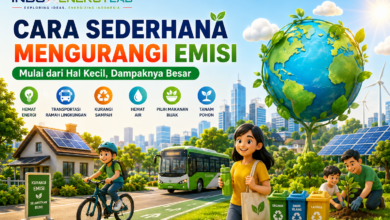
Simple actions:
1. Use energy wisely
Turn off unused lights and choose energy-efficient equipment.
2. Choose responsible products
Support companies with sustainable practices.
3. Support social programs
Join community activities and social campaigns.
4. Spread ESG awareness
Share knowledge with friends and communities.
5. Learn ESG and sustainability
These will become important future skills.
17. Conclusion: ESG = Business + Planet + People
Now you understand that ESG is not a complicated business term.
It is a new way of looking at how businesses should operate.
ESG teaches us that success is not only about money, but also about impact.
Companies that apply ESG are:
🌱 Protecting the planet (E)
🤝 Supporting people (S)
🔎 Building trust and responsibility (G)
In the future, the companies that survive will not only be the richest.
They will be the ones that care the most.
🌏 Final Thoughts
So, when you read about ESG in the news, don’t be intimidated by the term.
Think of ESG as an ethical guide for modern industries — helping the economy grow while keeping the planet safe.
Because sustainability is not only the responsibility of companies or governments.
It is everyone’s responsibility.
“If the Earth is our home, ESG is one of the ways we keep that home comfortable for everyone.”